


Shipping Mailer Supplier: Printing Quality Control for Custom Poly Mailers


A reputable supplier of Shipping Mailer services understands ink adhesion, color consistency, print registration, abrasion resistance, and other variables beyond reproducing an attractive logo. Sometimes samples passed visual inspections; however, ink peeling, color drifting, or graphical distortions occur in bulk production.
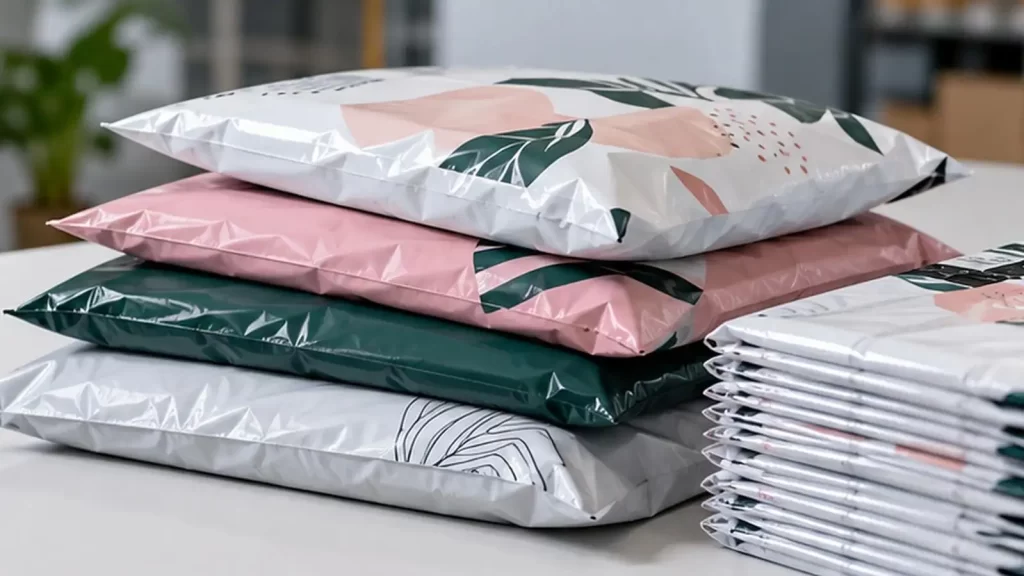
At GT GROUP, we understand the relationships of material selection, artwork preparation, printability assessment, and quality inspection of the finished bag. Knowledge of these relationships helps buyers set practical quality parameters for their wholesale purchases.
Poly Mailers: Why Printing Fails
Polyethylene film is flexible, has a low moisture absorption rate, and is sensitive to process conditions. Printing defects usually result from multiple interactive problems instead of a single piece of equipment.
Some of the failure mechanisms are:
•Ink peeling: Poor surface treatment and/or incompatibility of ink with the film.
•Color variation: Ink with an incorrect viscosity and/or film opacity.
•Misregistration: Web tension instability and/or poor press alignment.
•Smudging: Inadequate ink drying and/or excessive ink deposit.
•Poor barcode readability: Image distortion, poor contrast, and/or damaged printed surface.
Repeated folding and friction during parcel transportation can stress the printed surface, and expose the above printing defects.
PE Film Surface Treatment and Ink Adhesion
Corona Treatment and Surface Energy
Untreated polyethylene typically has low surface energy, often around 30–32 mN/m. This makes uniform ink wetting difficult.
Corona treatment modifies the film surface to promote ink adhesion. For many PE printing applications, approximately 38–42 mN/m provides a useful technical reference, although the required treatment level depends on ink formulation and printing technology.
A higher surface energy does not always mean better adhesion.
Three important areas need to be addressed:
•Additive Migration: slip agents and processing additives can build up on the film surface.
•Treatment Decay: surface energy can diminish with time due to exposure to the environment.
•Ink Compatibility: The balance of resin and solvent can affect the anchorage of inks to the film.
As a Shipping Mailer Supplier, we suggest specifying surface treatment requirements and adhesion of finished prints rather than treating dyne levels as the sole acceptance criteria.
Printing Accuracy: Color, Registration and Ink Transfer
Managing Flexographic Printing Variables
Flexographic printing is the predominant method for the production of poly mailers. It is dependent on plate condition, anilox rolls, ink viscosity and web tension.
It is important to maintain drying of the printed elements to prevent offset.
Differences in substrates also affect color accuracy. For example, a logo printed on white opaque PE may print differently on a grey or colored PE film.
Approved samples are essential for repeat orders.
Important Quality Parameters
| Quality Parameter | Measured Value | Importance |
| Surface Energy | mN/m | Ink wetting |
| Thickness | µm | Film uniformity |
| ΔE00 | Batch color consistency | |
| Register | Alignment | Multi-color alignment |
| Ink Adhesion | Peel test | Resistance to peeling |
| Printed Surface Durability | Damage after abrasion | Printed surface durability |
These parameters should have buyer approved tolerances and be inspected by quality control.

Flexographic vs Digital Printing: Which Should Buyers Choose?
Printing choices for a Shipping Mailer Supplier depend on variables like order quantity, artwork complexity, construction and durability of substrate, etc.
| Printing Technology | Main Advantage | Main Disadvantage |
| Flexographic | Capability for repeatable bulk printing | Plate setup and tension control |
| Digital | Flexibility in changing artwork | Substrate compatibility and unit cost |
| Color | Accurate representation of spot colors | Requirement of additional plates to represent brand colors |
| CMYK | Full color graphics | Colormanagement demands |
| Printing | Direct decoration of surface | Exposed ink is subject to wear |
| Reverse Printing | Ink protected within laminate | Laminates increase cost and complexity |
For conventional single-film poly mailers, surface printing is generally easier. Reverse printing requires a multilayer structure.
How to Verify Printing Quality Before Shipment
Visual inspection cannot establish whether a printed mailer will withstand distribution handling.
A dependable Shipping Mailer Supplier should establish a relevant verification plan encompassing multiple methods.
1. Ink Adhesion ‐ ASTM F2252/F2252M‐25
Tape testing evaluates ink's ability to adhere to flexible packaging. The adhesion of ink to the packaging should be assessed based on pre-established conditions and acceptance standards.
2. Abrasion Resistance ‐ ASTM D5264
The hardness of a surface is assessed by rub testing. Damage to a surface should be evaluated by the number of cycles and the force applied.
3. Barcode Verification-ISO/IEC 15416:2025
This standard defines the requirements for printing and validating 1D barcodes to confirm readability and reproduction. Barcodes should not be printed in areas which will be folded or sealed to distort them.
Bulk Printing Quality Control: From Artwork to Finished Bags
Pre-Production Approval
Prior to production, the buyer should approve the artwork, film and sealing clearances.
•Artwork: Dimensions, positioning and clarity
•Film: Thickness, opacity, surface condition
•Spot Colors: Definition and harmony
Keep a physical Golden Sample and Measurable Acceptance limits.
In‐Process and Final Inspection
Registration, color alignment and condition of ink should be monitored. Color variation and registration should be evaluated along with other print defects.
Final inspection should be performed on the finished bag. Artwork placement should not be evaluated on the printed web; rather, it should be assessed on the finished bag, post slitting and sealing.
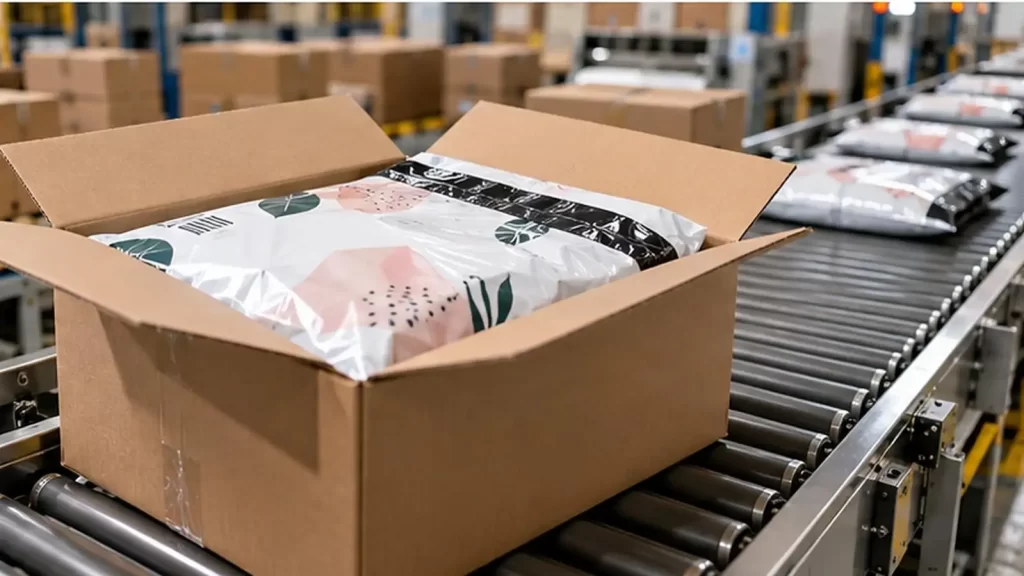
For wholesale procurement, the following should be defined:
•Registration and color tolerances
•Sampling frequency and AQL standards
•Adhesion and abrasion testing
•Identification of material batches
•Corrective actions and rejections of production lots
A Shipping Mailer Supplier should discern sample quality from bulk order consistency.
GT GROUP: Manufacturing Support for Custom Poly Mailers
We have 13 production equipment units and five high-speed envelope manufacturing lines. Our film blowing, printing and laminating operations are supported by slitting and bag conversion units. We engage in sample-based development and provide ODM services. We make logo adjustments to suit a variety of packaging requirements.
Our quality control process is at various stages- sampling, production and order fulfillment. This assures consistency in approving samples.
Prior to commencement of bulk production, we join the customer in understanding raw material specifications, print quality and requirements, artistic considerations, and the manner in which the order will be inspected, to help bridge the gap in sample approval and bulk order fulfillment.
For consistent branded packaging with Shipping Mailers, Regular Poly Mailers, samples are available upon request.
To discuss a project, or to order samples, indicate your expected quantity, type of film required, the print quality, and artwork to the GT GROUP.
FAQs
Q1: Does GT GROUP manufacture custom printed poly mailers?
Yes. We manufacture poly mailers and offer custom logo, graphics, and packaging design options for different branding requirements.
Q2: What printing customization services does GT GROUP provide?
We support logo adjustments, artwork customization, sample-based production, and ODM packaging development.
Q3: How does GT GROUP support ink adhesion quality control?
We can review film specifications and printing requirements with customers. Adhesion test methods and acceptance criteria should be confirmed for each project.
Q4: Can GT GROUP maintain consistent printing colors across bulk orders?
We use sample approval and production quality control. Specific color tolerances, such as ΔE00 limits, should be agreed upon before manufacturing.
Q5: What manufacturing equipment does GT GROUP operate?
Our facilities include film-blowing, printing, laminating, slitting, and bag-converting systems, with 13 production equipment units and five high-speed envelope production lines.
Share on Social:


