


Reusable Bubble Shipping Bags for E-Commerce Returns: Design and Benefits


A shipping mailer is only reusable if it remains protective after the first delivery. At GT GROUP, we recommend assessing Reusable Bubble Shipping Bags against three conditions: the bag opens without structural damage, retains its cushioning, and closes securely for the return journey.
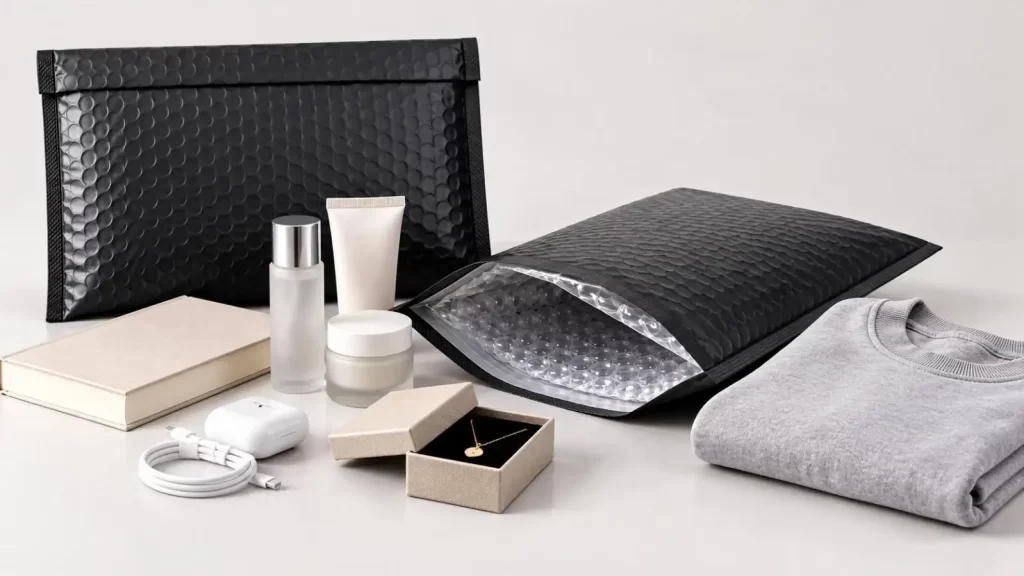
A second adhesive strip alone cannot compensate for punctured film or collapsed bubbles.
What Makes Reusable Bubble Shipping Bags Return-Ready?
Two main handling cycles must be considered during the design and manufacture of a package:
- Dispatch: The package must be sealed and the product cannot be stuck in the adhesive zone.
- Customer Opening: The bag must have a tear strip or opening line. The body of the bag must remain intact.
- Return Preparation: Old package labels should be removed or covered and a new bag seal should be used.
- Reverse Transit: The package must keep the product transported immobilized during transit.
Resealability and reusability are also different properties. Reusable means that a bag can be sealed and protects the contents. A resealable bag just means that the bag can be closed again. Recyclability is dependant on local and regional infrastructure, and the material makeup of a bag.
Critical Design Parameters of Reusable Bubble Shipping Bags
For Reusable Bubble Shipping Bags, we look beyond nominal film thickness. Bubble geometry, laminate bonding, and seal placement determine whether the package can endure a second trip.
| Design Element | Technical Concern | Return-Shipping Consequence |
| Air-bubble layer | Cell height, distribution, air retention after compression | Flattened cells leave vulnerable contact points |
| Outer film | Gauge consistency, puncture and tear propagation | Local thinning can turn sorting abrasion into a hole |
| Side seams | Seal width, alignment, bond continuity | Incomplete fusion can split when the mailer is fully loaded |
| Return closure | Second adhesive strip, flap overlap, contamination | Dust or a short overlap can reduce closure reliability |
| Usable dimensions | Inside width, length, thickness allowance | Oversized products strain seams; undersized products shift |
Bubble Protection Is Product-Specific
Air cells deform under impact to spread force over time, but they cannot prevent crushing indefinitely.
A phone accessory, cosmetic sample, and ceramic item do not impose the same loading conditions. Sharp corners may require an inner wrap; electrostatic-sensitive devices require separate ESD protection.
Closure Design Is a Failure Point
A single peel-and-seal adhesive is convenient for outbound packing, but it does not establish repeat-use capability.
A true return-ready specification should identify the second closure method, minimum flap overlap, and performance after opening.
How Should Reusable Bubble Shipping Bags Be Qualified?
Tests on empty envelopes do not determine effectiveness. The final sealed product needs to be tested. It needs to be opened and resealed for retesting.
•Distribution Simulation: Follow the appropriate ISTA 3A distribution simulation, which includes vibration, shock and impact loadings.
•Seal Consistency: If applicable, use ASTM F88/F88M and report the seal strength, failure mode and pass/fail.
•Reuse Inspection: Inspect for seam splits, delamination, punctures, bubble collapse, closure adhesion and other changes after first reuse.
•Production sampling: Measure internal dimensions, seal location, and uniformity of the laminate, as well as determine the location of partings of multiple samples, and material uniformity of multiple batches.
Neither ISTA 3A nor a single seal strength test proves a mailer can be reused indefinitely. Acceptance limits should also be defined based on the product and the number of shipments/cycles.
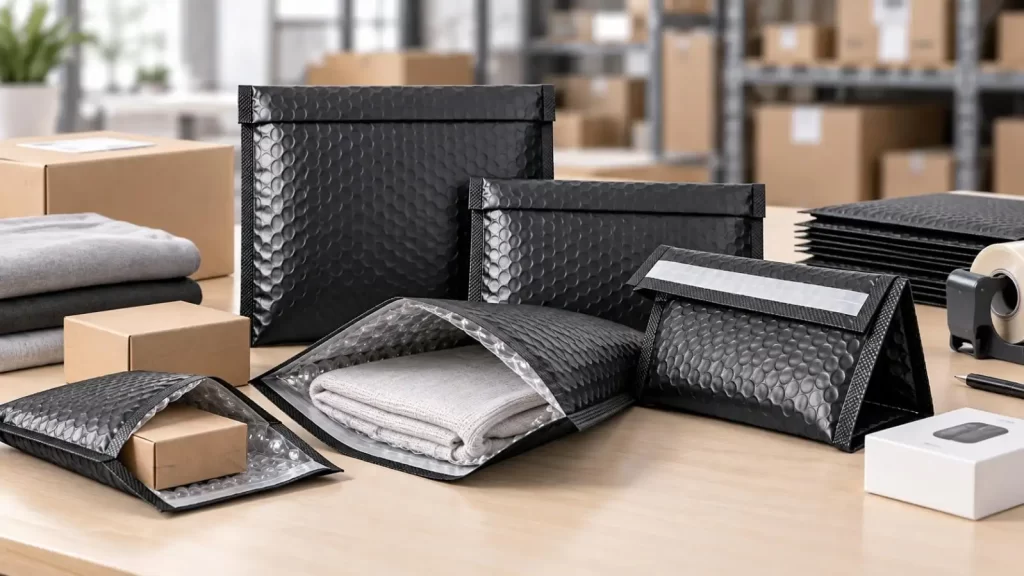
Do Reusable Bubble Shipping Bags Reduce Return Costs and Waste?
The use of the original bag would lead to potential savings.
Consider the cost for each shipping leg (e.g. purchase price, sealing material, repacking labor and time, and replacement packaging).
Environmental impact comparisons should be based on end of life, return rates, reshipments due to damage, etc.
A heavier design doesn't mean a better solution. Biodegradability and/or recyclability are probably needed to support your claim.
Reusable Bubble Shipping Bags for Your Return Program
Prior to purchasing Reusable Bubble Shipping Bags, confirm the following:
•Product profile (weight, dimensions, sharpness, fragility, and sensitivity to moisture).
•If customers can open, relabel, and reseal bags without tools (e.g. scissors or box cutters).
•Quality (measurements, cycle tests, closure specifications, and agreed tolerances).
•Operational fit (picking sizes, thickness of packs, and available labeling space).
Mailers are usually a good option for packing apparel and other non-fragile items. Other items may require a more protective packaging solution.
GT GROUP: Manufacturing Controls Behind Protective Mailers
Our Eco-Friendly Kraft Padded Mailers illustrate the production stages that matter in protective-envelope construction: polymer-film extrusion, air-bubble forming, lamination, cutting, folding, and thermal sealing.
Manufacturing Dimensions
| Product Data | Value |
| Nominal size options | 200 × 300 mm; 300 × 400 mm |
| Listed packing quantity | 50 pieces per bag |
| Construction features | Integrated bubble layer; heat-sealed edges |
Discuss Your Packaging Requirements with GT GROUP
At GT GROUP, we believe packaging selection should begin with packed-product dimensions, expected handling hazards, and closure requirements—not unsupported reuse claims.
Explore GT GROUP's Eco-Friendly Kraft Padded Mailers as a reference for bubble-cushioned construction, and contact our team to discuss sizes, sample requirements, and suitable protective packaging options for your shipping program.
FAQs
Q1. Are GT GROUP's bubble mailers designed for repeated shipping?
GT GROUP offers protective bubble-padded mailers, but the published product specifications do not establish a verified reuse-cycle rating. Buyers should confirm closure requirements and repeated-shipping performance before selecting a return-ready design.
Q2. What sizes are available for GT GROUP's padded mailers?
The listed standard sizes are 200 × 300 mm and 300 × 400 mm. Buyers should verify usable internal dimensions and product thickness before ordering.
Q3. What materials are used in GT GROUP's eco-friendly padded mailers?
GT GROUP describes a biodegradable polymer-film construction with an integrated air-bubble cushioning layer. Material composition and environmental certifications should be verified for the intended market.
Q4. How does GT GROUP manufacture bubble cushioning?
GT GROUP's published process includes polymer-film extrusion, air-bubble forming, lamination, cutting, folding, and thermal sealing to produce protective mailing envelopes.
Q5. How are the edges of GT GROUP's padded mailers sealed?
The edges are thermally bonded. Heat-seal continuity, alignment, and strength are important quality parameters that should be checked against application-specific requirements.
Share on Social:


