


Bubble Mailers for Ecommerce Shipping: Lightweight Packaging vs Protective Performance


For Bubble Mailers for Ecommerce Shipping to maintain impact protection, film thickness cannot be substantially reduced. Less film thickness can compromise the mailers' integrity and safety.
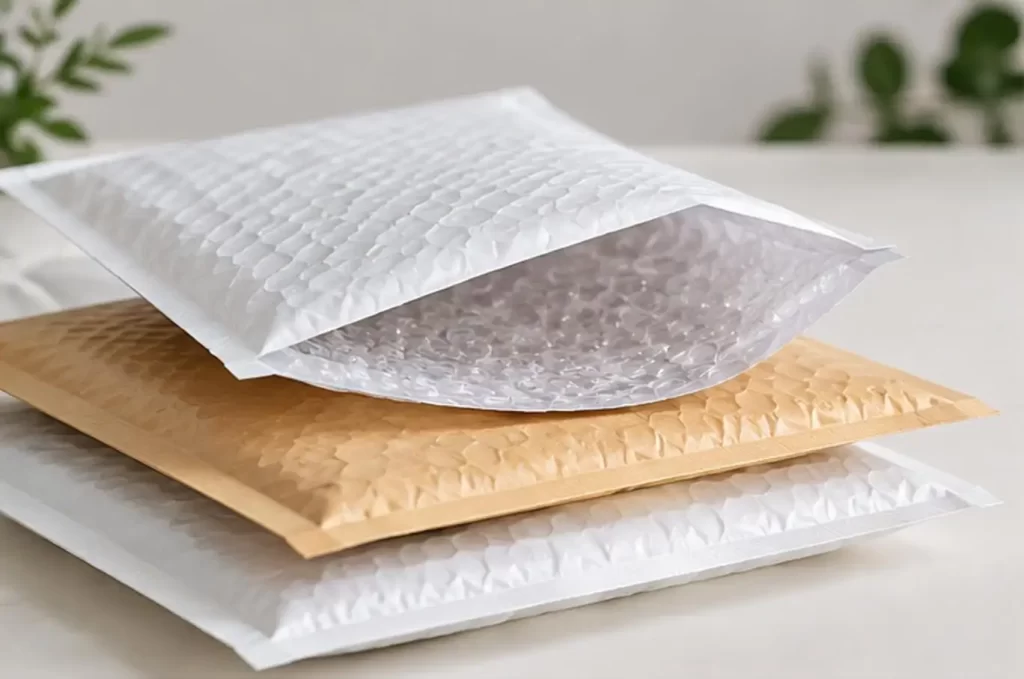
For lightweight packaging, we consider multiple facets at GT GROUP, such as optimization of cushioning structure and reduction of the package's overall size and weight. Our goal is to maintain the overall functionality of protective packaging across the parcel distribution chain.
How Do Lightweight Bubble Mailers Maintain Protective Performance?
A variety of factors, including the product, the film, and the bubble geometry determine the performance of Bubble Mailers for Ecommerce Shipping.
Bubble Cushioning and Impact Absorption
Bubbles remain deformed after an impact event and therefore, extend the deceleration period. As a result, peak deceleration forces are reduced.
Structural factors that determine the behavior of a cushioning system include:
•The size of the bubble (diameter and height)
•Air retention: The ability to retain cushioning over time and with use.
•Film Thickness and Toughness: Determines the level of puncture and tear resistance, and how well seals keep air in the cells.
If cushioning becomes fully compressed it is said to have "bottomed out." This causes impact forces to be transferred to the product.
Bubble layers should be sufficient to protect against expected impact conditions, and closely coupled with the weight of the product. The general rule of thumb is that a thicker layer provides better protection; however, this is not always the case.
Thinner Film, Thicker Failure?
Thin polyethylene film creates less material consumption and cost; however, a thinner film creates a less secure package and increases the risk of package failure.
Possible failure mechanisms include:
•Punctures caused by sharp edges of product.
•Bubble rupture caused by excessive compression.
•Separation of edge seals caused by product movement during sorting.
•Inadequate bond of adhesive closures caused by a change in temperature.
In order to mitigate failure, all factors including the product geometry, the seals, and the film material, should be analyzed together.
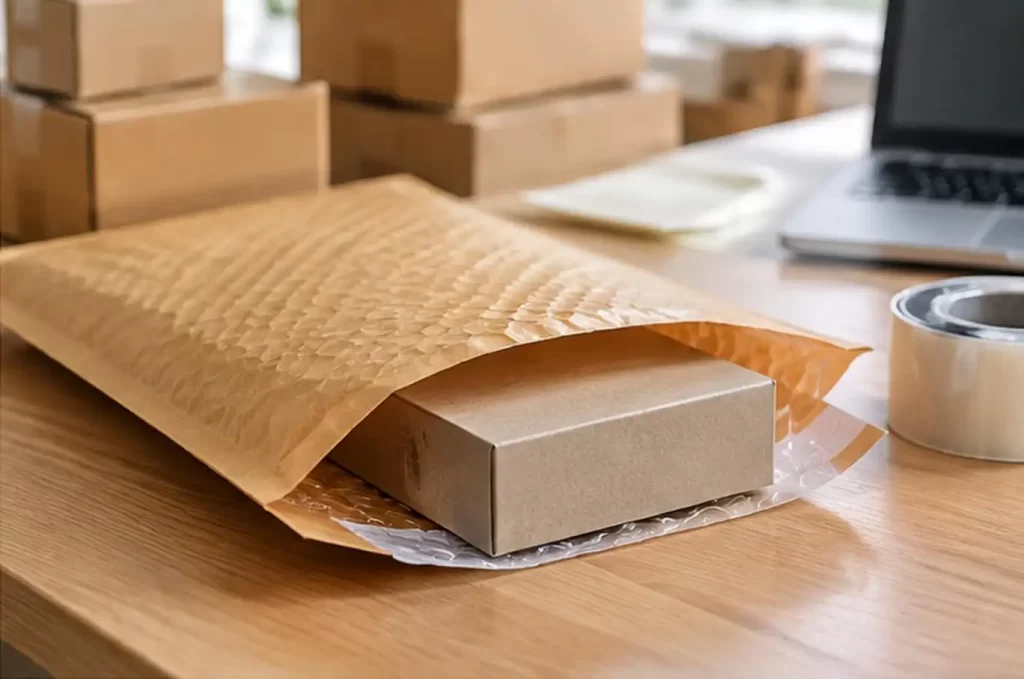
Comparison of Materials: Lightweight vs. Standard Bubble Mailers
There are factors other than material weight that should be considered when deciding on bubble mailers for e-commerce shipping.
| Packaging Type | Weight Considerations | Protective Characteristics | Suitable Products |
| Thin-Gauge Poly Bubble Mailer | Lower film consumption | Requires verification of puncture and cushioning performance | Small accessories, lightweight goods |
| Standard Poly Bubble Mailer | Greater material allowance | Flexible cushioning and abrasion protection | Cosmetics, small electronic accessories |
| Kraft Bubble Mailer | Paper outer layer with bubble lining | Surface protection; moisture resistance depends on construction | Books, stationery, small gifts |
| Corrugated Box with Cushioning | Generally more material and volume | Provides rigid support and crush resistance | Fragile or compression-sensitive items |
It is theorized that polyethylene bubble mailers can offer better protection to liquid water than kraft paper, but seams and closure still require protection.
Kraft bubble mailers have a paper outer layer, but because of the combined paper and plastic structures, material separation and recycling can be complicated.
Poly mailers have a certain amount of flexibility, and because of this, they can often be a better option for lightweight fragile items as compared to rigid containers.
One of the common challenges in package design is that of making lightweight packages without compromising on protection.
At GT GROUP, we have a range of options when it comes to modifying the dimensions of bubble mailers to various shipment requirements.
Reduction in Film Gauge: Trade-off
Let's look at the case when we reduce PE film thickness from 70 μm to 60 μm
All things being constant (i.e. density and film area), the theoretical reduction in film mass is 14.3%.
Keep in mind that this is not a 14.3% reduction in total mailer weight, as other components of the mailer like seals, bubble layers and other components remain the same.
Before switching to a thinner film gauge, buyers should assess parameters like:
•Puncture force and tear resistance
•Air retention and bubble compression
•Heat seal integrity and edge strength
•Movement of packaged product
•Optimization of mailer dimensions
Mailer dimensions should help absorb the shocks and impacts, and also allow for product movement within the mailer.
Manufacturing and Quality Assurance at GT GROUP
For Ecommerce shipping orders, uniformity in bubble mailer manufacturing is crucial.
Regarding ODM/OEM services, we are able to manufacture bubble mailers according to customers' requirements, including thicknesses, materials, and sizes.
Critical Manufacturing Parameters
| Measurement | Manufacturing Significance |
| Film Thickness | Controls material usage and gauge consistency |
| Bubble Diameter/Height | Influences cushioning geometry |
| Internal Dimensions | Determines fit |
| Seal Strength | Reliability of heat seal |
| Unit Weight | Monitors material consistency |
| Lamination Integrity | Identifies risk of layer separation |
Manufacturing precision should be defined by agreed specifications, including nominal dimensions, permitted deviations, inspection frequency and acceptance criteria.
At GT GROUP, we recommend customers confirm these specification through approved samples prior to bulk orders. Actual tolerance values will depend on the selected material and the construction of the product and not the other way round.
Testing Bubble Mailers for Ecommerce Shipping
In particular, when testing a mailer's reliability, the entire product (or actual contents) should not be evaluated based on the properties of individual materials.
Relevant Packaging Tests
| Test Method | Evaluation Focus | Practical Purpose |
| ASTM D5276 | Free-fall drop test | Evaluate impact-related package failure |
| ISTA 3A | Parcel distribution test | Assess package/product protection |
| ASTM F88/F88M | Flexible-material seal strength | Evaluate heat seal of package |
| Product-Specific Compression Testing | Bubble deformation and recovery | Evaluate collapse of cushioning |
Additional checks should include assessing adhesive performance, puncture damage and air-cells after handling.
For large volume orders, buyers should compare approved samples with production batches, rather than solely relying on a successful prototype test.
Does Lightweight Packaging Always Decrease Shipping Costs?
Not all the time. Actual weight and dimensional weight, service category, and carrier billing increments, are other factors determining freight charges.
Total cost per order is something to consider when packaging with bubble mailers for Ecommerce shipping.
Total Cost per Order = Packaging Cost + Shipping Cost + Expected Damage Cost
Let's say lightweight packaging saves 2 cents per shipment. What happens if an order is damaged? The cost to the shipper would be approximately $20. In this case, lightweight packaging would need to occur on 50 orders to avoid a net loss.
This simple example illustrates that shipments, claims, and replacements need to be considered when evaluating the use of lightweight packaging.
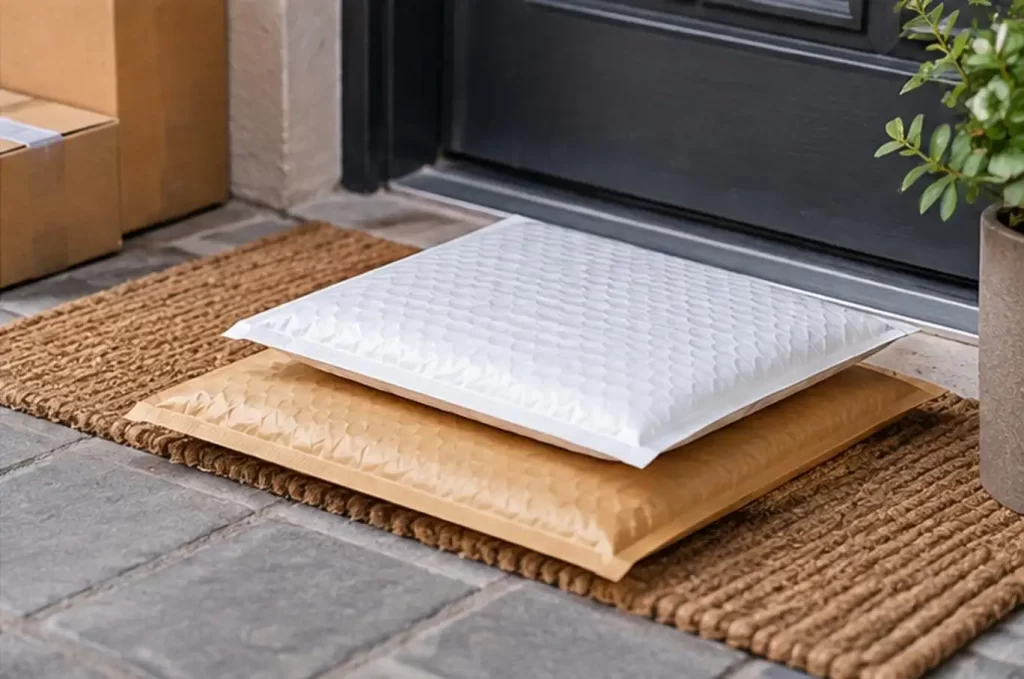
Considering Bubble Mailers for Ecommerce shipping with GT GROUP
GT GROUP has bubble mailers made of kraft or poly with self-sealing closures and protective cushioning, which can be customized to your needs through our OEM/ODM services.
When reviewing your final bulk order, you should evaluate sample performance, tolerance and product shipping conditions.
To learn more about our regular bubble mailers or to discuss your lightweight packaging needs with GT GROUP, contact us today.
FAQs
Q1. Does GT GROUP manufacture Bubble Mailers for Ecommerce Shipping?
Yes. We are a direct packaging manufacturer offering regular bubble mailers with customizable materials, dimensions, and printing.
Q2. What materials does GT GROUP use for bubble mailers?
We offer kraft paper and poly outer materials with internal bubble cushioning. Material selection depends on product and shipping requirements.
Q3. Can GT GROUP customize bubble mailer thickness?
Yes. We support custom thickness specifications. Final tolerances and material performance requirements should be confirmed before production.
Q4. How does GT GROUP balance lightweight design and protective performance?
We consider film thickness, cushioning structure, product dimensions, and sealing requirements when developing customized packaging.
Q5. Are GT GROUP bubble mailers moisture-resistant?
Our PE bubble mailers feature moisture-resistant outer films. Complete package protection also depends on seal integrity and handling conditions.
Share on Social:


