


Self-locking Foldable Mailer Boxes for Subscription Packaging: Insert Design and Product Protection


Self-locking Foldable Mailer Boxes provide more benefits than just secure closures to protect products in subscriptions during transport. A carton may arrive in tact but glass bottles, cosmetic jars, and other accessories inside may have gotten damaged due to vibration, displacement or concentrated impact.

At GT GROUP, we approach subscription packaging through three connected design factors: outer carton strength, internal product restraint, and manufacturing consistency. The protective insert must work with the mailer structure rather than simply fill unused space.
How Self-locking Foldable Mailer Boxes Manage Shipping Loads
Self-locking Foldable Mailer Boxes rely on integrated locking tabs, slots, and folded panels to determine the geometry of the enclosure, and thereby maintain it during assembly, in the absence of conventional tape.
They provide the following protections:
•Load distribution: Compression is carried by the carton structure.
•Closure retention: Tabs in slots prevent unauthorized opening.
•Internal restraint: Inserts prevent product displacement and cover vulnerable product surfaces.
A self-locking closure doesn't automatically lead to a tamper-evident closure.
Why Outer Carton Strength Is Not Enough
Two products can still collide, even if the outer carton remains intact.
Lateral and vertical movements and impacts must be absorbed by protective inserts. Impact cushioning materials should completely absorb the impact without bottoming out.
Selecting Insert Materials for Different Subscription Products
The insert material is determined by the fragility of the product, the shape and weight distribution of the product, and the conditions of transport.
| Insert Material | Protection Mechanism | Typical Application | Design Limitation |
| Molded Pulp | Cushioning and impact support | Bottles | Tools constraints |
| Corrugated Inserts | Structural and Spatial | Cosmetics | Cushioning travel |
| EPE Foam | Telescoping | Electronics | Plastic disposal |
| Paper Honeycomb | Support and cushioning | Fragile items | Compression testing |
E-Flute vs B-Flute Corrugated Construction
E-flute is thinner and more suitable for compact branded packaging. B-flute has a thicker board, and therefore, more cushioning space.
Neither provides automatic superior protection.
Different factors such as board grade, flute orientation, liner strength, moisture exposure, box geometry, and others can affect performance. In some cases, paper inserts can replace foam. If a product is fragile, cushioning should not be replaced by paper inserts, especially if it is being changed for reasons relating to sustainability.
Engineering Insert Fit: Clearance, Compression, and Product Stability
Dimensional Clearance and Contact Geometry
For Self-locking Foldable Mailer Boxes, the cavity should account for the maximum product size, variation in insert manufacturing, and expected material deformation.
For example, for a Nominal open dimension of 50.0mm with a Hypothetical Opening Tolerance of +/- 0.5mm, the Minimum Theoretical Total Clearance would be 0.3mm.
This example demonstrates tolerance accumulation, NOT the published manufacturing tolerance of GT GROUP. Clearances this small can be problematic if board swelling, variation in product assembly, or product fragility are considered.
For a mixed subscription product, inserts should:
•Provide structural support for glass bottles.
•Keep rigid components separate.
•Keep smaller accessories from being pressed against larger components.
•Provide cushioning around vulnerable edges.
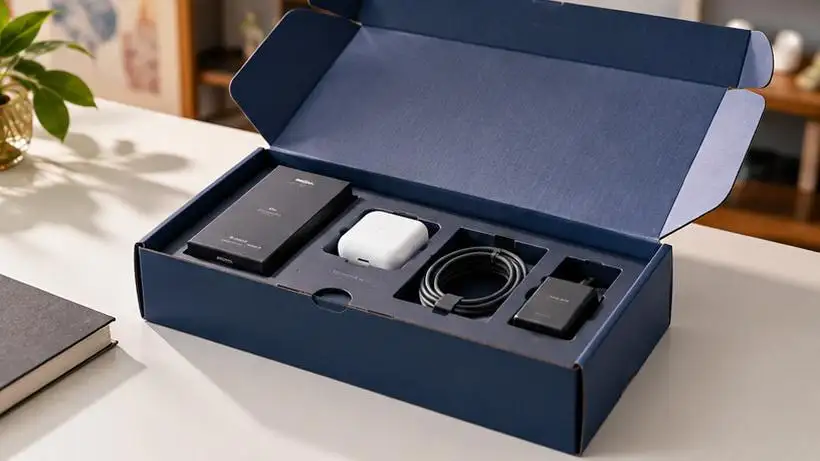
Fixed inserts vs. Modular Compartments
Fixed die-cut inserts allow brands to position products in a stable manner. Modular inserts allow brands to change configurations of products and leave a stable outer carton. For example, for a monthly subscription program, a modular design could allow brands to change specifications of the outer carton. This could also increase the number of components and assembly steps required.
Precision and Quality Control at GT GROUP
There are many requirements for quality control and precision during production processes for Self-locking Foldable Mailer Boxes. These include, but are not limited to, the use of corrugated and rigid paperboard, the process of corrugating, laminating and precision die-cutting.
The consistency of dimensions is essential to assure that accumulated small variances result in misalignment during assembly.
| Manufacturing Parameter | Verification Method | Potential Failure |
| Tab and slot dimensions | Caliper Measurement | Loose or difficult closure |
| Crease positioning | Dieline Inspection | Misalignment |
| Insert cavity dimensions | Dimensional Sampling | Movement |
| Board caliper | Thickness Measurement | Folding inconsistency |
| Assembled box geometry | Trial Assembly | Obstruction |
For bulk production, buyers must agree to specified dimensional tolerances and approved dielines, and state board specifications, and stipulate required inspection criteria.
Comparing Protective Inserts and Total Packaging Costs
Die-cut Inserts offer repeatable and consistent packaging which is not always the case with loose-fill.
Foam vs. Paperboard: Foam inserts can offer better impact protection than paperboard.
A custom die-cut insert should be compared to alternative protective methods rather than assessed on material costs alone.
When considering a bulk purchase, the total cost of the system (i.e. Carton and insert, tooling and assembly, storage and freight, product damage, returns and replacement) should be considered.
Testing Self-locking Foldable Mailer Boxes Before Production
Packaging qualification should use complete, product-loaded samples rather than empty cartons.
| Test Reference | Engineering Purpose |
| ASTM D5276 | Evaluate free-fall impact protection |
| ASTM D642 | Assess compression resistance |
| ISTA 3A | Simulate relevant parcel delivery hazards |
| Dimensional inspection | Verify closure and insert fit |
ISTA 3A applies to relevant individual parcel shipments weighing up to 70 kg.
Testing must capture product displacement, breakage, leakage, insert deformation, locking-tab separation, and carton damage.
Corrugated board is hygroscopic. Humidity conditioning helps to counter the effect of moisture on the board which affects board stiffness and its dimensional stability.
The ideal prototype should establish measurable acceptance criteria prior to bulk production.
Working With GT GROUP On Subscription Mailer Box Design
Important considerations when choosing self-locking foldable mailer boxes are product dimensions, weight distribution, SKU variations, product fragility, packaging quantities and shipping conditions.
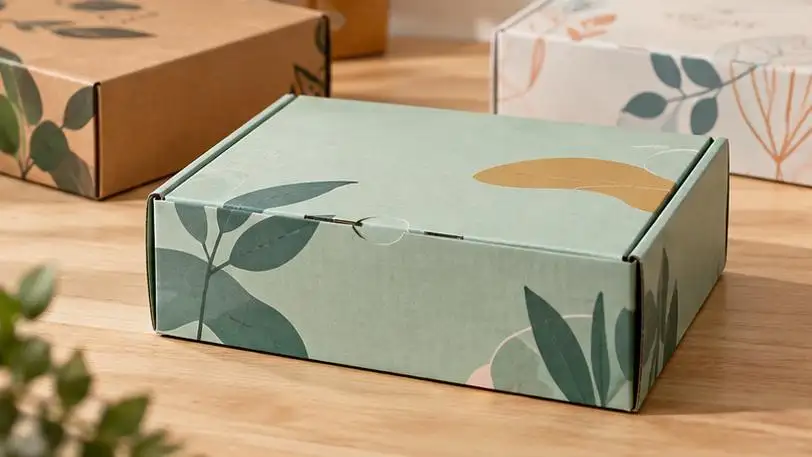
At GT GROUP, we provide self-locking constructions and personalize the size of print and mailer boxes, for subscription and seasonal gift packaging.
Take a look at our self locking foldable mailer boxes and subscription packaging, or share your product details with us for assistance in determining the required carton size, choosing appropriate materials and sample validation.
FAQs
Q1. What are GT GROUP's Self-locking Foldable Mailer Boxes?
GT GROUP offers foldable paperboard mailer boxes with integrated locking tabs for subscription packaging, e-commerce shipping, and seasonal gift packaging.
Q2. What materials does GT GROUP use for its mailer boxes?
GT GROUP offers corrugated and rigid paperboard constructions. Material selection depends on product weight, dimensions, and packaging requirements.
Q3. Can GT GROUP customize mailer box dimensions?
Yes. GT GROUP provides custom sizing to accommodate different product dimensions and packaging layouts.
Q4. Do GT GROUP's self-locking mailer boxes require tape?
The integrated locking structure allows tape-free box assembly. Additional security sealing may be necessary for certain shipments.
Q5. Does GT GROUP offer personalized printing?
Yes. GT GROUP supports customized branding and printed packaging designs for subscription boxes and seasonal gift packaging.
Share on Social:


