


How to Ship Clothes Without Damaging Them


Packing clothes can be simple enough, but they can end up being wrinkled, damp, dirty, and torn if the packaging isn't done right. For e-commerce companies, or fashion brands, selecting the best packaging, as well as the proper packing approach, can help preserve the product quality throughout delivery. These are some practical tips on how to safeguard clothing while being shipped.
1. Clean, Fold, and Prepare Clothes
Before packing, make sure garments are clean and completely dry. Fold each item neatly, to minimize wrinkles and unnecessary action. If you have delicate fabrics, place a protective inner bag or tissue paper to prevent rubbing and separate the fabric from other items. A neat fold will generally suffice for shirts, dresses, and lightweight clothing.
2. Pick the correct packaging
Each article of clothing is packaged differently, based on weight, fabric and shipping requirements.
| Packaging Type | Main Benefits | Best For |
|---|---|---|
| Poly Mailers | Lightweight and moisture-resistant | T-shirts, hoodies, casual wear |
| Bubble Mailers | Added cushioning | Clothing accessories |
| Kraft Paper Bags | Paper-based appearance | Lightweight garments |
| Corrugated Mailer Boxes | Better structural protection | Premium clothing and multiple items |
| Padded Mailers | Additional surface protection | Delicate packaged products |
For most non-fragile clothing orders, a properly sized poly mailer is a practical and economical option.
3. Select the Correct Mailer Size
If the mailer is too large, the clothing may move around; if too small, it may be necessary to apply an undue amount of pressure to seams and closings. These are general starting size guidelines:
| Clothing Item | Suggested Mailer Size |
|---|---|
| Socks and small accessories | 6 × 9 inches |
| One folded T-shirt | 9 × 12 inches |
| Shirts and lightweight tops | 10 × 13 inches |
| Hoodies and sweatshirts | 14 × 17 inches |
| Multiple clothing items | 14 × 19 inches or larger |
Actual sizing depends on garment thickness and folding method. Always measure the packed clothing before ordering mailers in bulk.
Read our guide on choosing poly mailer size and film thickness for more details.
4. Protect Clothes from Moisture and Dirt
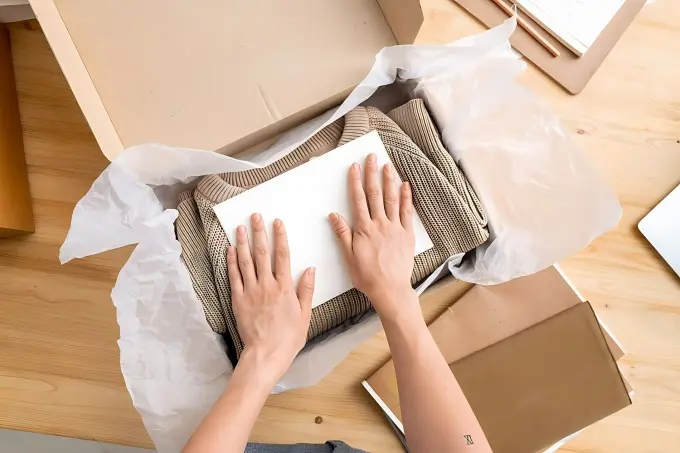
Clothing can be exposed to rain, dust, and handling during transportation.
To reduce these risks:
-
Use a sealed inner plastic bag for moisture-sensitive garments.
-
Choose mailers with reliable adhesive closures.
-
Avoid overfilling packages.
-
Check for holes or damaged seams before shipping.
-
Keep garments away from wet packing surfaces.
For valuable or delicate clothing, additional inner packaging may be worthwhile.
5. Use Strong Sealing and Suitable Outer Packaging
Secure closure helps to avoid garments falling out during transport. Lightweight items can be mailed in self-sealing poly mailers. A corrugated mailer box is a good choice for large pieces of clothing or with rigid accessories.
You can also compare poly mailers and bubble mailers to understand which format better suits your products.
6. Custom Clothing Mailers for Ecommerce Brands
Packaging is also a part of the customer experience for fashion businesses. Ordering clothes with custom printing, right materials, and good closures can make them look more professional.
At MailersFactory, we provide customized mailing bags, poly mailers, padded envelopes, and paper packaging for ecommerce and apparel brands.
The size, material, colour and printing of packaging can be customised based on the businesses need for shipping.
Frequently Asked Questions
1. What is the optimum package in which you can send clothes?
Poly mailers are used as a popular choice of material for lightweight non-fragile clothes as they are compact, lightweight and waterproof.
2. Is it okay to package clothing in plastic when you are sending them away?
Longer shipping trips may require an inner protective bag to keep garments dry and keep from coming in contact with moisture.
3. What to do to avoid wrinkling of clothing while it is being sent?
Neatly fold clothing, be careful not to compress it too much and use the right sized packaging.
4. Clothing – boxes or poly mailers?
Not always. While most soft items are best shipped in poly mailers, boxes are ideal for high quality clothing, accessories, or bulky items.
Conclusion
Preventing your clothes from being damaged during shipping begins with the way that they're folded, protected by the inner, and how they're packaged up. Poly mailers can be a convenient choice for regular clothing orders. Special care can be taken for more delicate or higher-priced items.
Share on Social:


- PREV: Best Rigid Mailer for Shipping Photos
- NEXT: Null
