


Anti-Shock Bubble Bags for Electronics for Circuit Boards, Sensors and Small Components


Circuit boards, sensors and compact electronic components may be lightweight, but they are not necessarily easy to ship. A small drop can crack a PCB edge, deform a connector or damage a solder joint. Repeated vibration may loosen internal parts, while pressure, moisture or electrostatic discharge can cause functional failures that are not visible during receiving inspection.
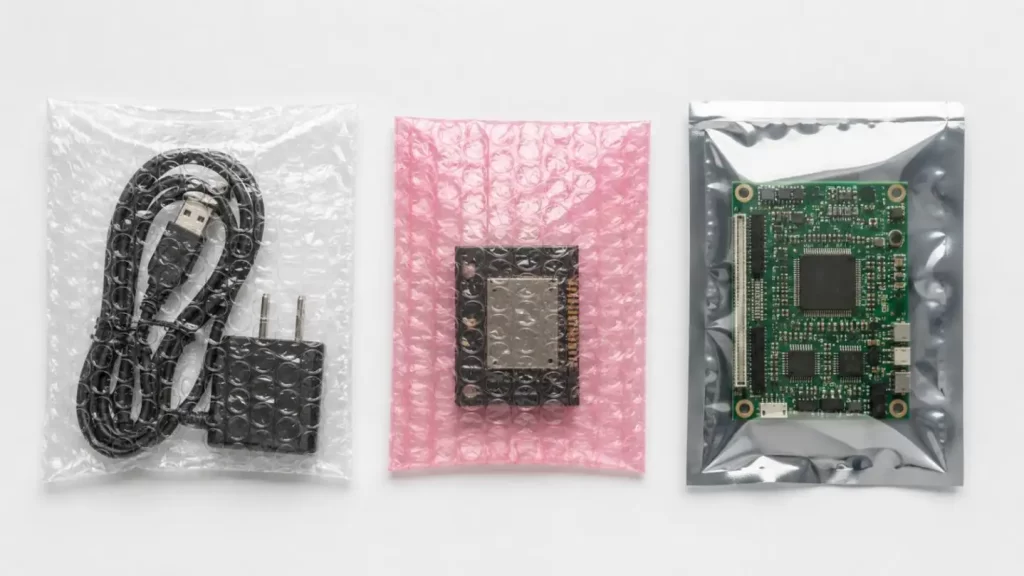
Anti-Shock Bubble Bags for Electronics help cushion products against routine impact, vibration, abrasion and movement. However, packaging must be selected according to the component's size, weight, fragility, exposed features, electrostatic sensitivity and distribution environment.
Standard bubble bags may be suitable for cables, adapters, housings and enclosed accessories. Bare circuit boards, chips and sensitive sensors normally require additional ESD, moisture or structural protection.
What Are Anti-Shock Bubble Bags for Electronics?
Anti-Shock Bubble Bags for Electronics are protective bags made with an air-filled bubble layer combined with an outer film, laminated structure or mailer material. Under pressure, the bubbles compress and help absorb part of the energy created by drops and handling shocks.
These provide the following primary functions:
•Cushioning against repeated shocks/impacts
•Restricting internal movement in a shipping carton
•Keeping components from contact
•Preventing surface abrasions and scratches
•Shielding connectors, edges, and housings
•Assisting in quicker packing and order fulfillment
Common forms of this material are open-top bags, flap bags, self-sealing bags and mailers of any size. Although these materials provide good mechanical protection, they cannot ensure that electronics that are sensitive will not be damaged in all shipping situations.
Main Shipping Risks for Electronic Components
Different transport risks require different packaging functions. Mechanical cushioning, electrostatic control and moisture protection should not be treated as the same requirement.
| Shipping Risk | Possible Product Damage | Packaging Requirement |
| Drops and impact | Cracked PCB edges, broken housings, bent connectors | Shock absorption |
| Continuous vibration | Loose solder joints, component movement, calibration changes | Movement control |
| Surface friction | Scratches, coating damage, worn labels | Product separation |
| Compression and stacking | Crushed housings, bent pins, damaged sensor bodies | Structural support |
| Electrostatic discharge | Failure of chips, boards or electronic modules | ESD protection |
| Humidity and condensation | Corrosion, short circuits, unstable performance | Moisture control |
Anti-Shock Bubble Bags for Electronics mainly address impact, vibration and surface contact. Unless the material is specifically designed for ESD control, a standard bubble bag should not be considered anti-static packaging.
Packaging Circuit Boards
Circuit boards are vulnerable at their edges, soldered components, terminals and connector areas. Exposed pins may also puncture thin packaging films.
A practical PCB packaging system may include:
•An anti-static or static-shielding bag as the first layer
•A bubble bag around the protected PCB for cushioning
•Cardboard or foam separators between multiple boards
•Corner or edge protection for larger assemblies
•A correctly sized corrugated shipping carton
Multiple PCBs should not be stacked directly inside one bag. Friction between boards can damage soldered components, while unrestrained movement can deform connectors.
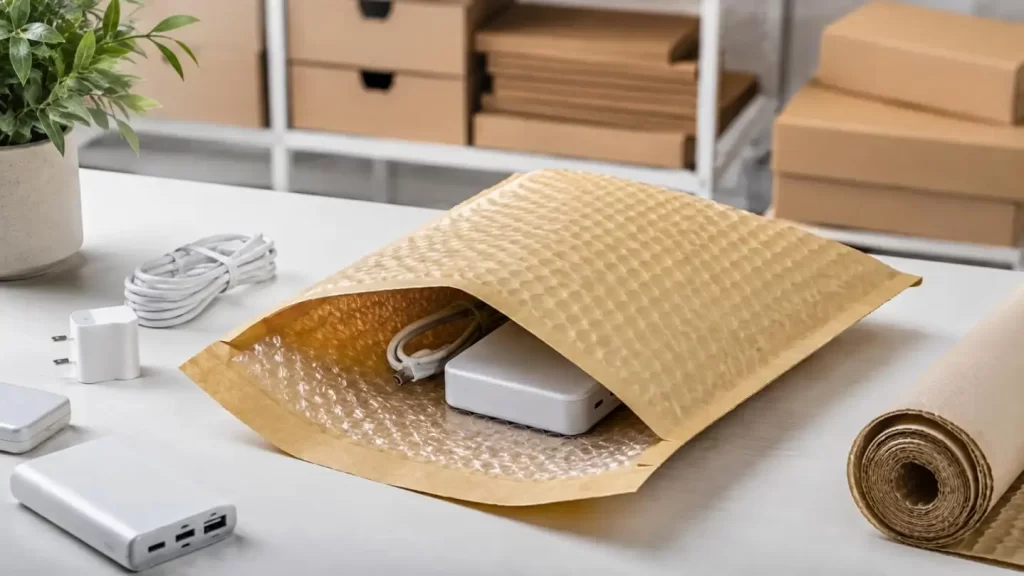
For electrostatic-sensitive circuit boards, Anti-Shock Bubble Bags for Electronics should be used as a secondary cushioning layer rather than the only protective material.
Packaging Sensors
Sensors often contain precision measuring elements, thin films, ceramic parts, glass components or calibrated internal assemblies. Their transport requirements may therefore extend beyond basic impact protection.
Important packaging considerations include:
•Preventing movement inside the package
•Avoiding concentrated pressure on the sensor body
•Protecting connectors and threaded sections
•Controlling humidity and condensation
•Preserving calibration during vibration and handling
A robust sensor packaging configuration may combine a bubble bag with foam inserts, molded trays or compartmented cartons. Moisture-sensitive sensors may also need a moisture-barrier bag, desiccant and humidity indicator.
Packaging Small Electronic Components
Connectors, adapters, small controllers, cable accessories, enclosed modules and electronic housings are generally less fragile than exposed PCBs. For non-static-sensitive products, Anti-Shock Bubble Bags for Electronics can provide effective surface separation and lightweight cushioning.
The packaging structure should still reflect the shipping environment:
•Use individual bags for components with finished surfaces.
•Add dividers when several products share one carton.
•Reinforce sharp edges or protruding connectors.
•Use an outer box for long-distance or multi-stage transport.
•Prevent heavy products from being packed above delicate components.
Standard Bubble Bags vs. ESD Packaging
| Packaging Type | Primary Function | Typical Applications |
| Standard Bubble Bag | Cushioning and scratch protection | Cables, housings, adapters |
| Anti-Static Bubble Bag | Reduces static generation and accumulation | Selected PCBs and electronic modules |
| Static-Shielding Bag | Shields against external electrostatic discharge | Chips, sensitive boards, high-value assemblies |
| Moisture-Barrier Bag | Restricts moisture transmission | Humidity-sensitive devices and long-term storage |
Anti-Shock Bubble Bags for Electronics provide mechanical cushioning, but standard bubble materials should not automatically be treated as electrostatic protection.
A product may require more than one layer. For example, a PCB can be sealed inside a static-shielding bag and then placed inside a bubble bag before being packed in a corrugated carton.
Choosing Bubble Size and Bag Structure
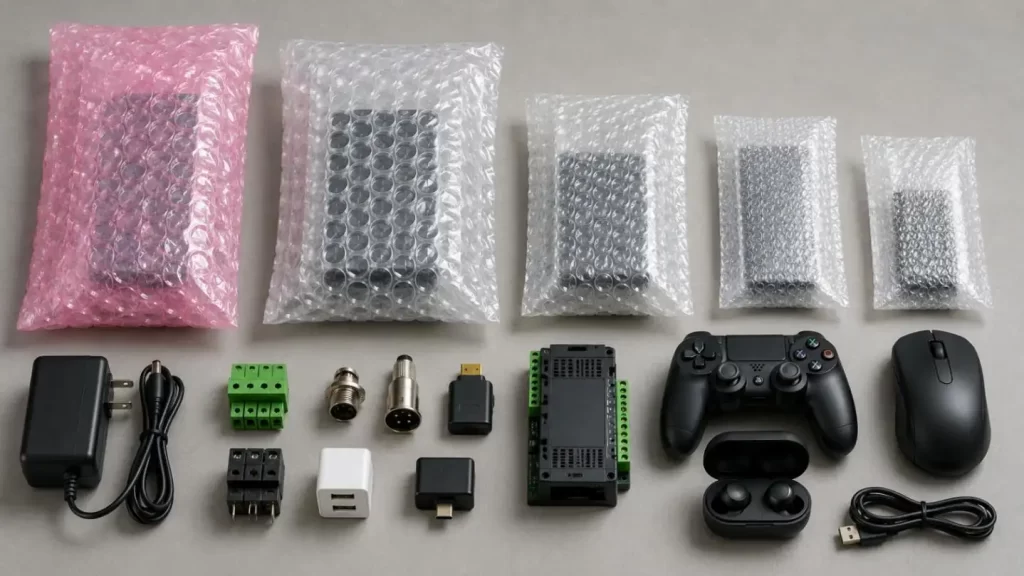
Bubble sizes must be based on the weight, geometry, and delicacy of the product. The sizes listed below are ranges you may consider, however, these are not absolute values.
| Product Type | Suggested Bubble Size | Recommended Packaging Structure |
| Connectors and cable accessories | 6 - 10 mm | Lightweight bubble bag + carton |
| PCBs and electronic modules | 6 - 10 mm | ESD inner bag + bubble cushioning |
| Precision sensors | 10 - 20 mm | Thicker bubble layer or foam insert |
| Controllers and adapters | 10 - 20 mm | Self-sealing bag in an outer carton |
| Multiple loose components | 6 - 10 mm | Bags + dividers |
When selecting sizes, keep in mind:
•Product dimensions and weight
•Exposed pins and/or sharp edges
•Expected shock and vibration
•Distance of shipping (domestic vs. international)
•Combining different products in the same package
•ESD and sensitivity to moisture
•Storage time, shipping conditions
How to Calculate the Correct Bag Size
It is correct when it is a snug fit with a little room left so that the bubble layer is not compressed.
Bag Width = Product Width + Product Thickness + 20–40 mm
Bag Length = Product Length + Product Thickness + 30–50 mm for Sealing
Allow additional clearance for connectors, terminals and irregular shapes. The self-sealing flap should not be included in the usable internal length.
Bags that are too tight put pressure on fragile parts and can even crush the cushioning. Bags that are too large allow movement diminishing the usefulness of Anti-Shock Bubble Bags for Electronics.
When is a Bubble Bag Not Enough?
Generally a single bubble bag is not enough when the part is:
•Heavy and/or very fragile
•Fitted with exposed pins or sharp edges
•Vulnerable to electrostatic discharge
•Susceptible to humidity
•Costly and/or professionally calibrated
•Shipped internationally and/or through many different transports
•Stored for a long time
Suitable multi-layer configurations include:
•ESD bag + bubble bag + corrugated carton
•Bubble bag + foam insert + outer box
•Moisture-barrier bag + desiccant + cushioning
•Individual bags + cardboard dividers
•Molded tray + reinforced shipping carton
The best protection for the electronic components depends on the materials used in the whole system and not on a single component.
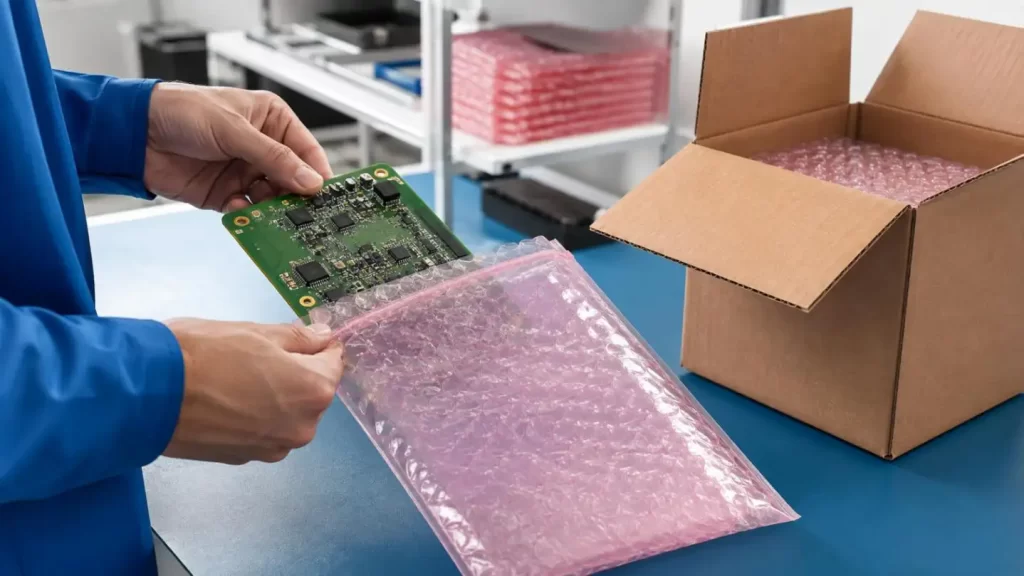
Conclusion: Match the Packaging to the Component
Anti-shock bubble bags control and manage component movement while providing cushioning. However, the best solution must be determined according to each case. Certain circuit boards may require ESD protection and moisture and pressure control may be required for some sensors. From tiny auxiliary components, a carton with cushioning may be all that is required.
Packaging for small components can be challenging. GT GROUP offers a biodegradable alternative to bubble mailers for small products, including electronics that require protective packaging. Because GT Group bubble mailers are biodegradable, they include an inner cushioning layer of bubbles.
•Safe Shipping: GT Group bubble mailers' biodegradable nature is excellent for shipping products that require protection.
•Cushioning: The inner bubbles of the mailers provide cushioning so small products being shipped arrive safely. Saves
•Weight and Cost: Because the design of the bubble mailers is compact, unnecessary packaging weight and costs of shipping are reduced.
For alternative designs of packaging for your products, please contact GT GROUP.
FAQs
Q1. What Anti-Shock Bubble Bags for Electronics does GT GROUP offer?
GT GROUP sells protective bubble packaging and Biodegradable Bubble Mailers for small products, accessories, and some electronic items. The best specification for a product is decided based on its size, weight, fragility, and other related considerations of shipping.
Q2. Can GT GROUP offer custom packaging for circuit boards and sensors?
GT GROUP can discuss custom bag dimensions, sealing formats, material structures and cushioning formats for the product being packed. Circuit boards and precision sensors must be evaluated individually before confirming the packaging design.
Q3. Are GT GROUP Bubble Mailers okay for direct contact with bare circuit boards?
A bubble mailer should not be used as the only layer of packaging for electrostatic sensitive circuit boards. First, the circuit boards should be placed in appropriate anti-static or static-shielding packaging and then bubble cushioning should be added along with an outer box.
Q4. Do GT GROUP Biodegradable Bubble Mailers serve as ESD protection packaging?
Biodegradable bubble mailers do offer cushioning and surface protection, though. Unless a product is designed and verified for ESD control, it should neither be considered anti-static nor static-shielding packaging.
Q5. For what electronic products can GT GROUP Biodegradable Bubble Mailers be used?
They may be used for lightweight cables, adapters, electronic accessories, enclosed modules and some retail devices. Delicate products may require cushioning and protective barrier layers.
Share on Social:


