


Moisture-Resistant Insulation Foam for Cold Chain Packaging


Condensation is a significant cause of damage in cold chain packaging. Paper cartons and dividers can weaken and lose adhesion, and labels can become damaged, all possibly contributing to illegible barcodes. Moisture can create a slipping hazard from fluids, foods, and drugs, and potentially damage packaging. The moisture can also lead to corrosion and unpleasant odors, and create a negative experience for the end users.
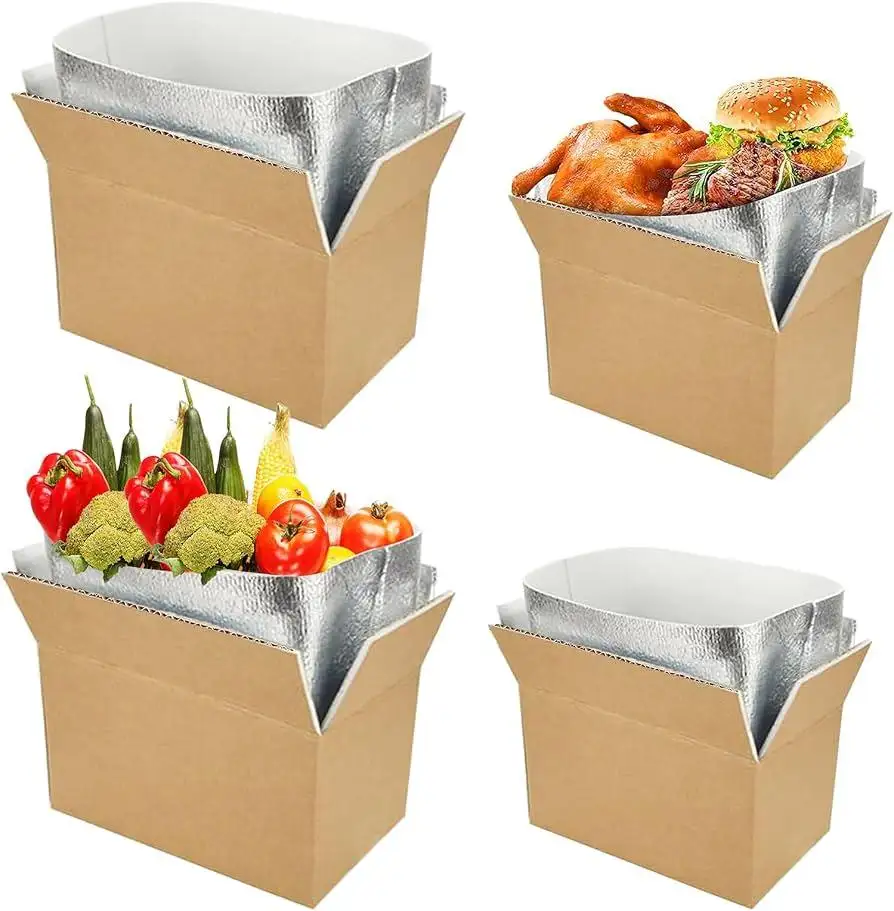
Using Moisture-Resistant Insulation Foam can mitigate most causes of potential damage. However, the control of condensation demands consideration for the entirety of the packaging system, not just the insulation.
Effective control of condensation using Moisture-Resistant Insulation Foam is achieved by slowing moisture absorption and separating temperature-sensitive materials from the outer cold and damp packaging. Optimum control demands a number of factors to be addressed including the correct preconditioning of the product, placement of coolants, sealing of liners, appropriate packaging, and validation based on the desired route.
What Causes Condensation in Cold Chain Packaging?
Condensation takes place when air comes in contact with a surface and the air cools to a temperature below the dew point. Moisture is then captured in a liquid form on the surface of the product, coolant, or the inner box.
Warm moisture-laden air + cold surface = condensation
Four primary elements influence the extent of the problem:
•Temperature gap: The greater the temperature difference between the product being packed and the surrounding air, the greater the potential for condensation
•Relative Humidity: Moist, warm air will increase the relative humidity in a container and can lead to greater moisture buildup inside.
•Air infiltration: Unsealed, loose closures, and gaps in liners allow air to flow into the package.
•Packing conditions: Improperly packed materials with a temperature that is too cold can lead to instability in the internal environment of the package.
Condensation may occur on primary packaging, in the shipping carton, and along the gel packs and may even be seen on the inner wall liners. It may help pinpoint the source of the problem. The problem may be attributable to internal moisture, air leaks, or poor placement of coolants.
How Moisture-Resistant Insulation Foam Controls Damage
Moisture-Resistant Insulation Foam is not an absorbent pad or active dehumidifier. Its primary function is to slow thermal exchange while maintaining physical performance in a damp environment.
| Packaging Function | Role of Moisture-Resistant Insulation Foam |
| Thermal control | Slows heat movement between the load and external environment |
| Moisture resistance | Limits water uptake that could reduce insulation performance |
| Product separation | Keeps packed goods away from damp carton walls |
| Structural protection | Helps maintain the liner shape under normal handling |
| Cushioning | Reduces movement, vibration, and direct coolant contact |
| Clean interior | Creates a neat lining between products and outer packaging |
A suitable Moisture-Resistant Insulation Foam liner can also help prevent condensed water from reaching corrugated board, where moisture may reduce compression strength.
Moisture resistance does not mean that a material is completely waterproof or capable of eliminating condensation under every condition.
Open-cell vs. Closed-cell Insulation Foam
Due to cell structure, both moisture absorption and thermal stability are directly affected.
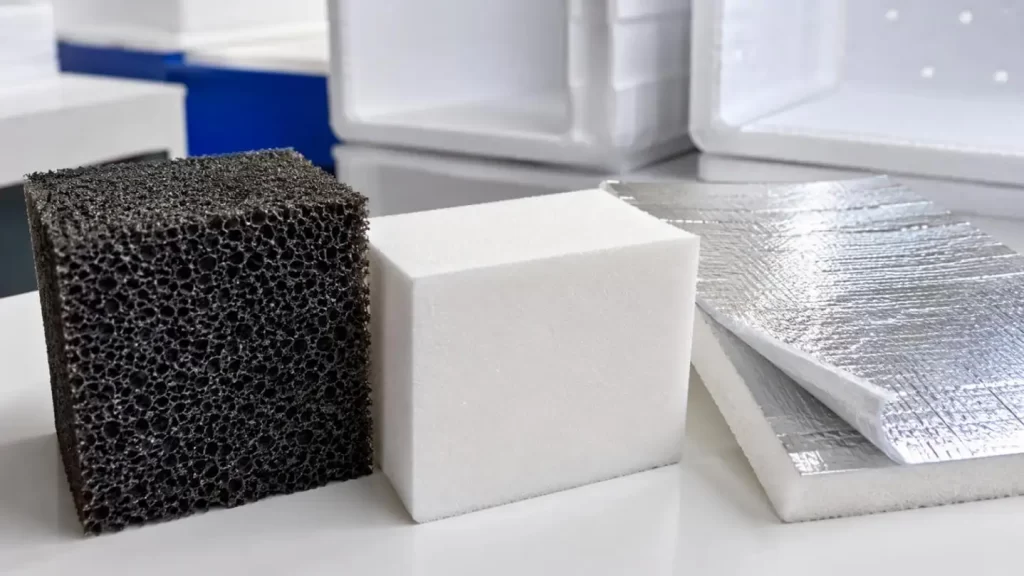
| Characteristic | Open-Cell Foam | Closed-Cell Foam |
| Cell Structure | Connected Pores | Mostly Sealed Cells |
| Water Absorption | Generally Higher | Generally Lower |
| Moisture Resistance | Limited | Well Suited for High Humidity |
| Compression | Soft and Highly Flexible | More Structural Stability |
| Main Use | Filtration and Soft Cushioning | Packaging for Cold Chain Storage and Sealing |
For the transport of refrigerated and frozen goods, it is generally the case that closed-cell Moisture-Resistant Insulation Foam is used, since it absorbs little moisture and retains its structure better. A surface laminated with PE or with a reflective film may serve as an additional moisture barrier and improve the interior's cleanliness.
The final selection should still be based on tested performance rather than cell structure alone.
Why Condensation Still Occurs in an Insulated Package
Even the best insulated packages can develop condensation if the packing configuration is poor.
Common causes:
•Liner corners or joints not fully covered.
•Bag opening or carton flaps not properly sealed.
•Packing of frozen products exposes them to humid air.
•Products packed before they reach the needed cooling.
•Moisture-sensitive products contact gel packs or ice packs.
•Packages have a lot of empty space.
•The liner is crushed, torn, or punctured.
•Coolant is not sufficient for the route.
•Transit time is longer than the proof of performance.
•The moisture barrier of the outer carton is poor.
There are many exceptions to the use of high-quality Moisture-Resistant Insulation Foam that cannot cover poor packing practices, excessive air leakage, and personal judgment regarding coolants.
How to Prevent Condensation Damage
1. Precondition the Product
Products that are delivered frozen or chilled should be allowed to reach the required temperature before shipping. Thermal packaging should resist temperature change. It should not be required to cool a product after being loaded in a vehicle.
2. Select the Correct Foam Structure
A low-absorption Moisture-Resistant Insulation Foam with proper thickness, density, flexibility, and temperature resistance (if applicable) should be used. A moisture barrier may be required for laminated sheets.
3. Seal Corners, Folds, and Openings
The liner should be seamless around the cargo. Sealing corners and aligning flaps prevents thermal bridges and prevents humid ambient air from coming into contact with cold surfaces.
4. Separate Coolants from Products
In situations where local freezing or wet packaging may occur or if the product may be damaged, use dividers, inserts or foam packing layers.
5. Minimize Internal Void Space
A box or bag must be close to the size and shape of the packed load. Internal air space is humid air that contributes to product movement during transit.
6. Add Absorbent Materials Where Necessary
Limited moisture from gel packs, fresh food and condensation may be addressed with absorbent pads; however, pads should not be relied upon to address moisture control and sealing issues and should be used with adequate insulation.
7. Manage the Packing Area
Before AOPP (Automation of Packing/Packaging) begins, prepare the merchandise, coolants, boxes, and liners. Hot and humid environments can, and typically do, create problems associated with moisture during the AOPP process. Moisture gains are a result of pathways for humidity. Disrupt these pathways.
How to Select Moisture-Resistant Insulation Foam
Not all liners are the same. When choosing a liner, internal dimensions, shipping durations, material efficiency, and payload are all factors to consider in addition to thickness.
Consider the following in your evaluation:
•Water absorption
•Thermal conductivity
•Foam density
•Compression recovery
•Temperature range
•Surface lamination
•Flexibility and foldability
•Puncture resistance
•Coolant compatibility
•Food and product contact
•Carton and bag dimensions
•Transport duration
The right Moisture-Resistant Insulation Foam is a designed part of a cold chain strategy and should not be used in isolation.
Thermal Bag Liners vs. Thermal Box Liners
When comparing Thermal Bag Liners to Thermal Box Liners, keep in mind the following:
| Liner Format | Common Application | Main Advantage |
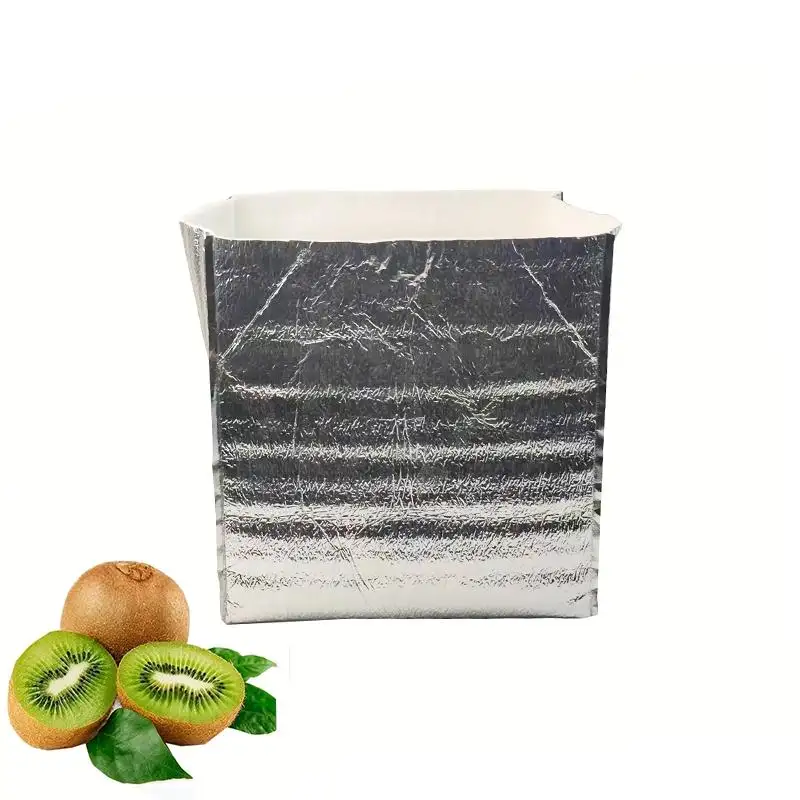
| Thermal bag liner | Food delivery, meal kits, short-distance e-commerce | Lightweight and flexible |
| Thermal box liner | Frozen foods, beverages, and longer logistics routes | More stable inside a corrugated carton |
| Custom foam insert | Fragile or irregular products | Improves positioning and cushioning |
| Laminated foam liner | High-humidity and condensation-prone shipments | Adds a surface moisture barrier |
When deciding on product weight, target temperature, coolant type, transport duration, external climate, and outer packaging, a combination of factors should be used to determine the applicable choice.
Validate the Complete Packaging System
Cold chain performance should be verified using the complete pack-out, including:
•Product quantity and starting temperature;
•Coolant type, quantity, and location;
•Liner thickness and joint design;
•Outer carton or bag;
•Sealing method;
•Temperature profile;
•Humidity exposure;
•Vibration and drop conditions;
•Expected transport duration.
Useful evaluations include thermal chamber testing, water absorption testing, compression testing, seal inspection, condensation observation, and actual-route shipment trials.
Build a More Reliable Cold Chain Packaging System
Using Insulation Foam, along with Coolant and appropriate dimensions for packaging, seals, and enough shipping time, the impact of condensation can be lessened. Each of these components is equally important.
Specializing in time-critical logistics for the e-commerce sector and the temperature-controlled transport of perishable foods, GT GROUP develops Thermal Bag and Box Liner systems. These systems enable the thermal shipping systems to maintain their integrity. GT GROUP can manufacture thermal liner cushion structures fully customized to your cold chain shipping packaging.
FAQs
Q1. What Moisture-Resistant Insulation Foam solutions does GT GROUP offer?
GT GROUP offers thermal bag and box liner solutions. These liners fit into bags or boxes and help maintain a cleaner bag or box interior through transport and storage by slowing transfer of heat and limiting contact with damp outer packaging.
Q2. What products can be packed with GT GROUP thermal liners?
GT GROUP thermal liners can be used for packaging perishable foods, beverages, meal kits, frozen products, refrigerated products, and other time and temperature sensitive cargo. The appropriate structure of the liner should be chosen based on product temperature, the dimensions of the package, the type of coolant, the duration of the transport, and the environmental conditions of distribution.
Q3. Can GT GROUP provide liners for both bags and boxes?
GT GROUP does offer thermal bag and box liners, and can provide bag liners as well as box liners. Bag liners are typically used for lightweight and flexible delivery packaging, while box liners can offer a structure to thermal linings inside corrugated shipping cartons.
Q4. How does GT GROUP Moisture-Resistant Insulation Foam reduce condensation damage?
Especially in the case of humid environments, GT GROUP's Moisture-Resistant Insulation Foam helps decrease the transfer of external heat and decreases the amount of moisture that is absorbed by the liners. It also creates a buffer between the packed products and the damp carton walls. Additional measures, such as proper sealing, coolant positioning, product pre-conditioning, and packaging verification, are still required.
Q5. Can GT GROUP customize the size of a thermal liner?
GT GROUP can discuss thermal liner configurations for bags and boxes of different dimensions. Providing the internal package size, product dimensions, shipment weight, coolant arrangement, required temperature range, and expected transport time helps determine a more suitable liner structure and fit.
Share on Social:


