


The “Golden Shield” for Electronics: Types of Shipping Envelopes for Electronics


Envelopes designed for shipping small electronics help protect lightweight and delicate components from damage and loss exposures that may occur during shipment such as impact, abrasion, dust, moisture, and electrostatic discharge. E-commerce sellers, electronics manufacturers, repair suppliers, and component distributors who select the proper envelope are likely to experience reduced damage claims and enhanced packing and delivery efficiencies.
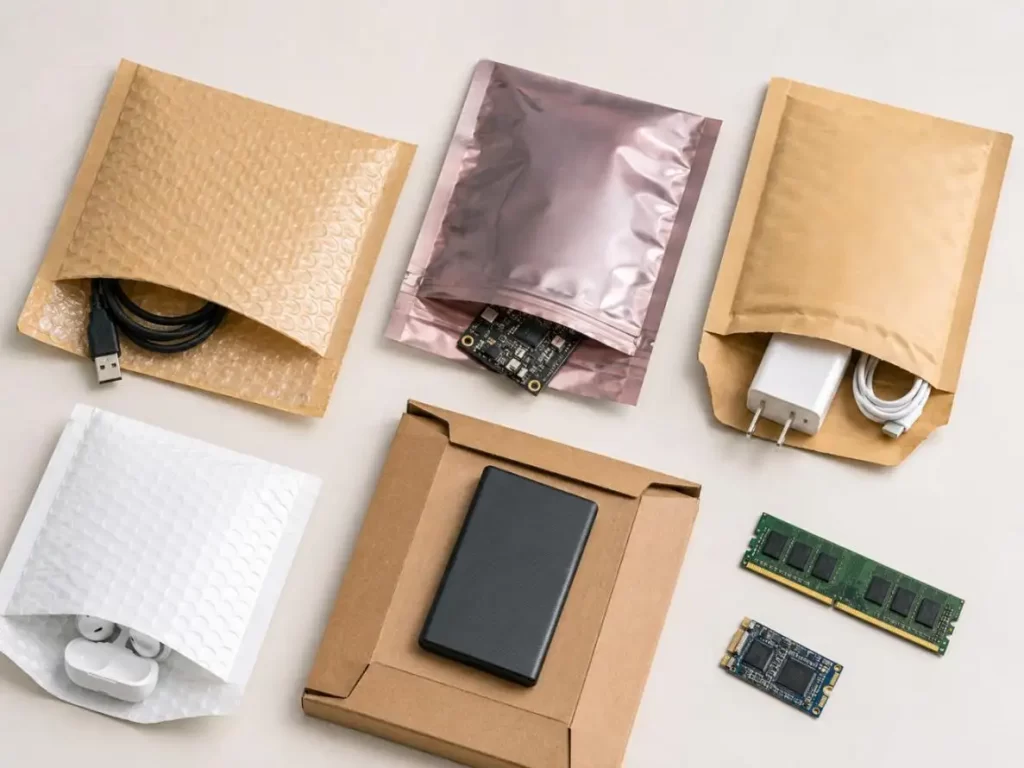
GT GROUP has a variety of Shipping Envelopes for Electronics and offers a solution for cushioning, moisture intrusion, structural integrity, and ESD protection. This guide will help you understand the different shipping envelope types so you can choose the best option for your electronic products.
The Importance of Shipping Envelopes for Electronics
Electronic products endure a number of packing and delivery challenges including exposure to sorting systems, pressure from stacking, vibration, and rough and unpredictable handling. Shipping Envelopes for Electronics are purpose-built for protective layering the challenges of their specific deliveries, unlike standard mailers.
Consider the challenges presented by shipping cables and chargers. These components likely need just basic cushioning. Memory modules, circuit boards, and chips may require a higher degree of protection and ESD safe packaging is an example of that. It is unacceptable to pack bare electronic components in a standard bubble mailer since packing in ESD safe packaging can result in harmful static discharge. It is best to use ESD protective packaging for such components.
The Most Common Types of Shipping Envelopes for Electronics
| Type | Outer Material | Inner Protection | Appropriate Items |
| Regular Bubble Mailer | Kraft paper or poly film | Bubble cushioning | Cables, chargers, phone cases, small accessories |
| Static Shielding Envelope | Metalized polyester or ESD-safe film | Static shielding with foam or bubble lining | PCBs, RAM, chups, hard drives |
| Padded Kraft Paper Mailer | Heavy-duty kraft paper | Paper fiber padding or bubble lining | Adapters, dongles, earphones |
| Poly Bubble Mailer | PE film | Bubble cushioning | Lightweight electronics needing moisture resistance |
| Corrugated Board Mailer | Corrugated fiberboard | Rigid board, optional inserts | External drives, tablets, boxed devices |
Regular Bubble Mailers
Regular Bubble mailers are one of the more common shipping envelopes for small electronics. These bags feature an outer layer made of either Kraft paper or Poly fabric, that contains an air bubble lining. This provides basic cushioning to protect products from impacts, during distraction.
These bags are ideal to use for packaging small product accessories. These include USBs, phone chargers, cases, ear buds and other small yet boxed products. The bags are even lightweight to further lessen the shipping costs. Their self-sealing closure helps to speed up the packing process. Compared to paper based mailers, Poly mailers are moisture proof.
Static shield envelopes are used for shipping electronics which may suffer damage from ESD (electrostatic discharge) during shipment. These shipping envelopes are constructed using a combination of metallic films or other ESD-safe materials with either a bubble or foam liner.
It is essential to understand the distinction between anti-static and static shielding. Properties of anti-static materials help reduce the development of static. Shielding materials prevent contents from the effects of electrostatic fields. Static shielding envelopes are the better choice for bare circuit boards, chips, memory modules, processors, and other delicate components.
When an envelope is securely sealed, a static shielding envelope can provide a protective barrier like a Faraday cage. The protective barrier is effective only if the surfaces are intact, securely closed, and the proper materials were used.
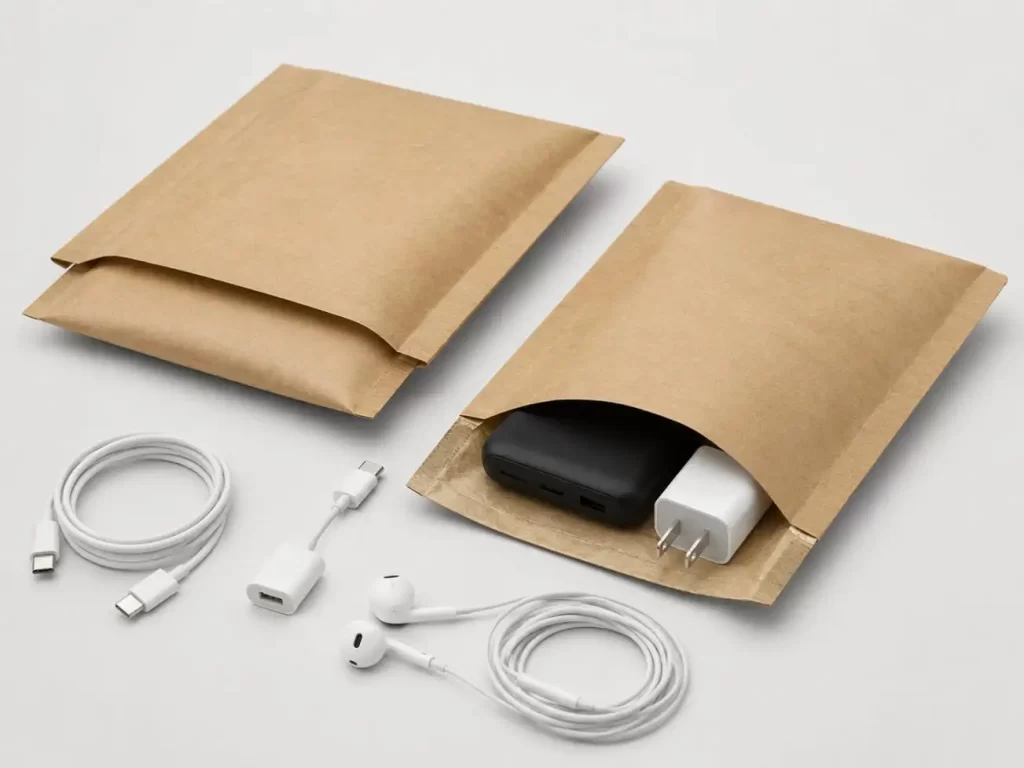
Padded Kraft Paper Mailers
These shipping envelopes tend to be a more robust paper-based packaging option. Padded kraft paper mailers for shipping electronics tend to have a heavy-duty outer layer of kraft paper that is either lined with paper fiber padding or bubble lining.
The paper structure offers better stiffness compared to thin film mailers and minimizes surface abrasion. Paper-based padded mailers offer a better option for recyclability as compared to other mailers, if they are accepted at local recycling facilities. Lightweight electronic accessories like dongles, adapters, and earphones that don't require ESD shielding can be packaged in these.
Flexibility and tear-resistance of Poly bubble mailers are superior to paper mailers. They are good for lightweight gadgets, accessories, small cables, small gadgets, and retail-packaged electronics. Among the options for mailers, bubble mailers address the need for cushioning and water resistance, and if static sensitivity is not a major concern, they make a good choice for packaging.
Corrugated Board Mailers
These mailers work best for shipping electronics when a more rigid structure is required. These envelopes are designed for items that can't be bent like external hard drives, small tablets, small gadgets, or retail packaged electronics.
These mailers hold their shape to resist bending and stacking pressure. They can also be designed to hold foam inserts, die-cut supports, or custom inner holders to help secure the contents.
GT GROUP's Manufacturing Advantage
Shipping Envelopes for Electronics demand excellent material control and consistent production quality. GT GROUP pays attention to manufacturing details with respect to bubble layer consistency, film thickness, paper strength, adhesive, and clean sealing.
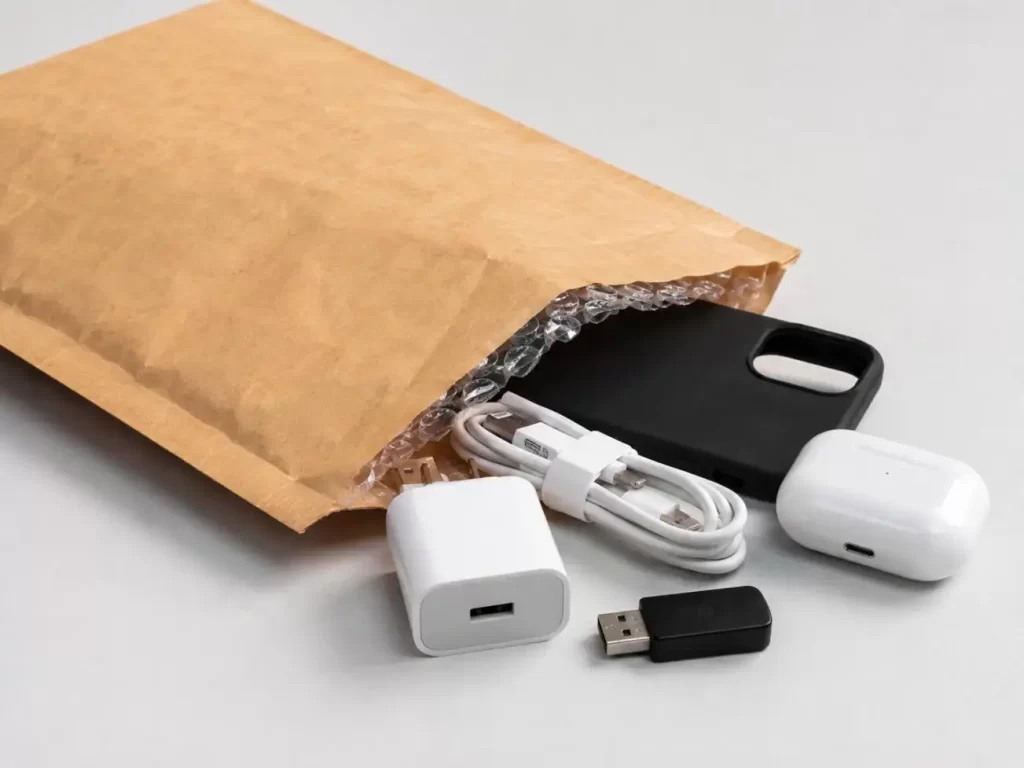
If specialized ESD envelopes are required, GT GROUP can assist with the selection of materials and surface resistances, to provide static protection. mailers require an understanding of the interaction between the bubble size, film and seal strength. With GT GROUP's experience in materials and with their controlled production processes, customers can be assisted with the selection of the most appropriate Shipping Envelopes for Electronics with respect to the risks of their products and the conditions during shipping.
How to Choose the Right Shipping Envelopes for Electronics
There are five main considerations to keep in mind for the selection of Shipping Envelopes for Electronics:
•Static shielding envelopes are recommended for PCBs, chips, RAM and bare components.
•Product fragility: Choose bubble or foam-lined options for impact protection.
•Moisture exposure: Use poly or poly-lined mailers for humid or rainy shipping routes.
•Bending Risk: Use corrugated mailers if the contents being sent are at risk of bending.
•Sustainability Goals: Use padded Kraft paper mailers where available Recycling systems.
Choosing appropriate Shipping Envelopes for Electronics is an important element to ensure that delivery damage is minimized, packing and delivery is consistent, and each delivery is ensured to be the described experience. GT GROUP is able to offer a variety of packaging solutions from bubble mailers, to corrugated mailers, to static shielding envelopes, to encapsulate the diverse needs of electronic shipping.
FAQ
Q1. What materials comprise Shipping Envelopes for Electronics?
Main materials include kraft paper, poly film, bubble lining and ESD shielding film, for cushioning, moisture-proof and anti-static purposes.
Q2. Can I use regular bubble mailer for electronics?
Yes, use regular bubble mailers for cables, chargers, phone cases, and accessories that do not require static protection.
Q3. What is the safest envelope for circuit boards?
For circuit boards and ESD-sensitive parts, use static shielding envelopes.
Q4. Are poly bubble mailers good for electronics?
Yes, poly bubble mailers provide cushioning and moisture resistance and are suitable for lighter electronic products.
Q5. Do all electronics need anti-static packaging?
No. Only static-sensitive components such as chips, memory modules, and bare circuit boards require ESD protection.
Share on Social:


