


Gold Standard Certifications for Compostable Mailing Bags


The rapid expansion of e-commerce has made brands more acutely aware of the impact their delivery packaging has on the environment. Compostable Mailing Bags are an innovative solution that addresses the issue of plastic mailer waste by promoting a controlled composting solution. As with any other packaging solution that makes claims of being biodegradable , compostable or eco-friendly, these claims should be verified to ensure there is no greenwashing. For many packaging buyers, recognized third-party certifications offer the only assurance that Compostable Mailing Bags meet the requirements for composting.

What are Compostable Mailing Bags?
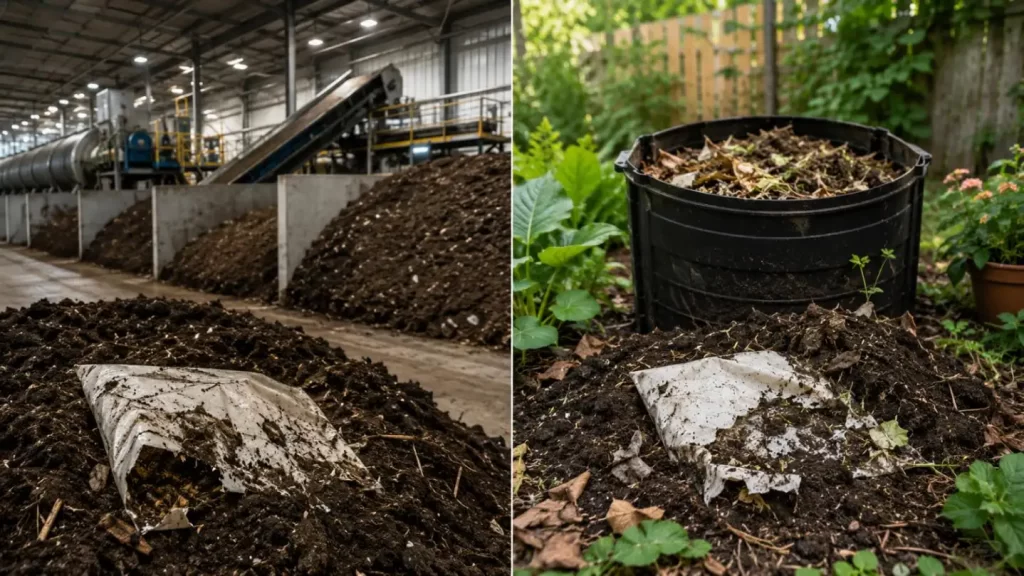
Compostable Mailing Bags are shipping mailers that, when disposed of in a composting environment, will break down into carbon dioxide and water and eco-benign minerals and biomass. They are different from ordinary degradable or oxo-degradable bags, which may only fragment into smaller plastic pieces.
Most certified Compostable Mailing Bags are made from compostable polymer blends, bio-based materials, or a combination of bio-based and fossil-based compostable resins. Their performance depends not only on the raw material but also on film thickness, sealing quality, printing ink, additives, and the actual composting environment.
Key Certifications for Compostable Mailing Bags
The following certification systems are widely used as reference standards for Compostable Mailing Bags in different markets.
| Certification / Standard | Main Region | What It Means for Compostable Mailing Bags |
| EN 13432 | Europe | Requires industrial compostability, including disintegration, biodegradation, limits on heavy metals, and no harmful effect on compost quality. |
| OK compost INDUSTRIAL | Global / Europe | TÜV Austria certification for products suitable for industrial composting facilities, generally aligned with EN 13432 requirements. |
| OK compost HOME | Global | Applies to products that can biodegrade in lower-temperature home composting conditions. This is stricter than industrial composting for many materials. |
| ASTM D6400 | North America | Covers plastics designed to be composted in municipal or industrial aerobic composting facilities. |
| BPI Certification | North America | Third-party certification based on ASTM standards, commonly used for compostable packaging claims in the U.S. and Canada. |
| AS 4736 | Australia / New Zealand | Australian industrial compostability standard for biodegradable plastics suitable for composting and microbial treatment. |
| AS 5810 | Australia / New Zealand | Australian home compostability standard for products intended for home composting systems. |
These certifications are often considered "gold standard" because they require independent testing rather than relying only on a manufacturer's marketing statement. Certified Compostable Mailing Bags undergo evaluations to test for biodegradability for ease of breakdown and disintegration, as well as heavy metal and eco-toxicity testing, and check for suitability for compost conditions.
Importance of Certification
Certification reduces the risk of purchasing Compostable Mailing Bags with ambiguous sustainable claims and offers the consumer confidence that the bags will perform as certified. A credible certification verifies that the assessed product is the one sold, as opposed to the assessed raw materials.
With regards to composting, certification such as EN 13432 and ASTM D6400 pertains to standards that are more relaxed and controlled with regards to the elements (temperature, moisture, etc.). Certifications such as OK compost HOME and AS 5810 are more stringent and indicative of home composting.
Regarding the disposal of Compostable Mailing Bags, the consumer needs to consider the composting environment. A Mailing Bag certified for a particular composting standard should be reliable for home composting as well, and should be labeled as such for disposal clarity.
GT GROUP and Compostable Mailing Bags
GT GROUP focuses on more sustainable and responsible packaging solutions for brands, with a particular focus on maintaining the same levels of performance in shipping for the formulations that they provide in their packaging. This entails the selection and control of the materials as well as the provision of support for custom packaging.
1. Experience with Materials and Production
GT GROUP has experience with the materials they are working with, as well as with the production of the films. This is essential as compostable films can have very different properties compared to traditional polyethylene films, and can require much more precise control with regards to the extrusion and sealing. GT GROUP applies production experience to manage film flexibility, sealing strength, and print compatibility, helping Compostable Mailing Bags remain practical for packing, storage, and delivery.
2. Certification-Oriented Development
GT GROUP's technical team works with the requirements of common standards such as EN 13432, OK compost, and ASTM D6400 in mind. From resin selection to film structure, each stage is designed to support third-party certification where required by the customer or target market.
3. Custom Sizes and Branding
GT GROUP offers standard sizes of 25 x 35 cm, 30 x 40 cm, and 33 x 38 cm but are supportive of custom sizes for certain product categories. Custom printing offers brands the option of placing their logos, sustainability messages, QR codes, and disposal instructions on their Compostable Mailing Bags.

Identifying Trustworthy Compostable Mailing Bags
A lot goes on the back of a pack besides the selling price. Customers interested in buying Compostable Mailing Bags should check a bit more.
First, they should look for an established certification logo like OK compost, BPI, or a local compostability mark.
Second, they should ask for a copy of the certificate and check the license number, product scope, and how long it is valid.
Third, they should check if the bag is certified for industrial or home composting.
Last, they should check the practical things like the film's thickness, sealing strength, the printing ink, the shelf life, and the packaging quantity.
Final Words
Approved Compostable Mailing Bags certify brands can meet their packaging needs. Certifications such as EN 13432, OK compost, ASTM D6400, BPI, AS 4736, and AS 5810 provide reliable means of checking the compostability of materials and offers substantial means of reducing the practice of greenwashing.
GT GROUP meets the desire of these brands for packaging that is both sustainable and visible by offering compostable mailing bags that integrate custom printing, flexible size options, and a focus on certification. While the infrastructure to support collection and disposal of compostable materials limits the scope of compostable packaging, certified Compostable Mailing Bags contribute to a more responsible approach to e-commerce packaging.
FAQs
Q1. What raw materials constitute Compostable Mailing Bags?
Compostable Mailing Bags are constructed using certified compostable polymers, bio-based materials, and sometimes a blend of compostable resins.
Q2. Do Compostable Mailing Bags leave a carbon footprint post disposal?
Compostable Mailing Bags are designed to leave a minimal carbon footprint once disposed of, provided they are placed in the correct composting conditions.
Q3. What is the duration required for Compostable Mailing Bags to decompose?
Compostable Mailing Bags will take varying lengths to decompose based upon their certification level and the composting conditions they are placed in. Typically, decomposition occurs quicker in an industrial composting facility than in a home composting facility.
Q4. What are the reputable certifications for Compostable Mailing Bags?
Some of the more reputable certifications are EN 13432, OK compost INDUSTRIAL, OK compost HOME, ASTM D6400, BPI, and AS 4736.
Q5. Are logos able to be printed on Compostable Mailing Bags?
Yes, brand logos, designs, and disposal instructions may be printed on Compostable Mailing Bags.
Share on Social:


