


Foldable Shipping Boxes for Subscription Businesses: Materials, Design and Ordering Guide


Shipping a changing assortment of products each month creates challenges in packaging selection. Each box must be analyzed to evaluate if it can protect products of various sizes. The evaluation must include the cushioning and closure of the box. Design failures in a box can cause damage to products.
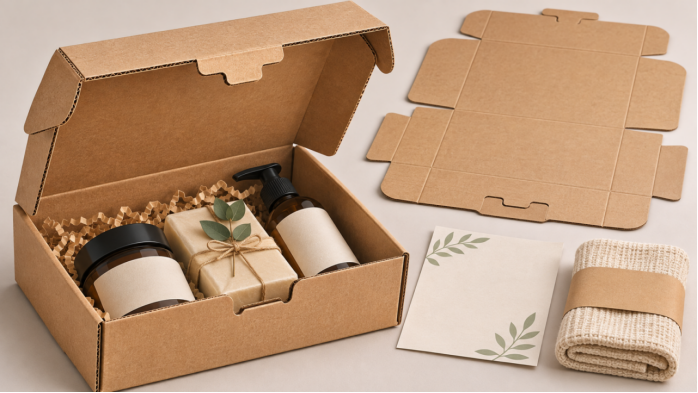
GT GROUP helps customers evaluate box structures, materials and dimensions based on their products and shipping requirements. The evaluation should consider box design, materials, and shipping conditions together.
1. How to Choose Packaging for Recurring Subscription Shipments
Monthly product assortments can vary in size, shape, and weight, so the packaging needs to accommodate different combinations.
Complications may include:
• Unpredictable product combinations: Monthly product combinations are unpredictable and require various kinds of packing for each shipment.
• Product movement: Packing may allow product movement resulting in product impact during transport.
• Closure failure: Locking tabs may not lock resulting in the opening of the box during transport.
• Longer packing time : Many folds and seals increase the time required for packaging.
• Dimensional weight: Packages may become too large resulting in increased shipping costs without improving product protection
Foldable Shipping Boxes need to address the above complications for packages intended for recurring shipments.
2. Corrugated Board Selection: E-Flute, B-Flute, and Compression Strength
Shipping Protection and Flute Structure
Corrugated foldable shipping boxes get their shape and rigidity from fluted paper sandwiched between liner boards. The performance of such boxes depends on the design of the flutes, the properties of liner boards, the adhesive used for their construction, and the boxes' dimensions.
| Board Type | Structural Characteristics | Typical Application |
| E-Flute | Thin profile with fine flutes | Compact cosmetics and lightweight subscription kits |
| B-Flute | Thicker profile with different cushioning characteristics | Mixed-product subscription boxes |
| Double-Wall | Two corrugated layers | Heavier or more demanding shipping applications |
Key Board Specifications and Performance Tests
• Edge Crush Test (ECT): The resistance of a corrugated board to compression in the edge-wise direction. Expressed as kN/m or lb/in.
• Box Compression Test (BCT): Measures the compressive resistance of an assembled box under specified test conditions. Top-to-bottom compression is commonly assessed when evaluating stacking performance..
• Paper Grammage (GSM): The mass of paper per unit area; does not define box strength by itself.
Finished box performance is dependent on closure type and panel size as well as the environment, i.e. humidity, in which the box is shipped.
GT GROUP recommends selecting the corrugated board grade based on the total packed weight, box dimensions, and expected shipping conditions. If needed, test a fully packed sample before placing a bulk order.

3. Self-Locking vs. Conventional Shipping Box Designs
How Self-Locking Closures Work
Mailers and Shipping Boxes using self-locking closures achieve carton closure by using pre-formed die-cut tabs that interlock with adjacent slotted surfaces.
Reliability of the closure is affected by:
• Accuracy of tab and slot dimensions
• Creasing and die-cutting tolerances
• Locking engagement
• The board material
A self-locking closure is not automatically tamper evident. Additional sealing may be necessary for certain routes or product weight.
Which Packaging Configuration Should Buyers Choose?
| Configuration | Advantages | Main Considerations |
| Self-Locking Mailer | Compact | Tab retention and accuracy in assembling |
| Taped Shipping Carton | Flexible | Consumption of tape and steps in packing |
| Adhesive-Strip Box | Easy to seal | Reliability of adhesive and resealability |
| Mailer with Custom Inserts | Improved positioning of product | Tooling of inserts and SKU compatibility |
For fragile subscription products, the strength of the internal product restraint can be as important as the strength of the outer-carton.
4. Match Foldable Shipping Boxes to Product Dimensions and Fulfillment Systems
Internal vs. External Dimensions
Use the parcel’s outer dimensions to estimate dimensional weight under your carrier’s rules. Use the box’s internal dimensions to check whether the products, inserts, and cushioning will fit.
Arrange the products as they will sit inside the box, then measure their overall length, width, and height.
• Clearance: Allowance for inserts and packing material.
• Standardization: It may be prudent to examine one larger size versus several smaller sizes.
• Confirm that the box structure, dimensions and assembly method are compatible with your manual packing process or automated equipment.
For many carriers, dimensional weight is calculated as:
Dimensional Weight = Length × Width × Height ÷ Carrier Divisor
For example, a 30 × 22 × 8 cm parcel produces 0.88kg dimensional weight using an illustrative divisor of 6,000 cm³/kg. Actual billing depends on the carrier's rules.
The cheapest carton price does not guarantee the lowest delivered cost.
5. Assembly, Storage, and Routine Quality Checks
Flat-packed Foldable Shipping Boxes can reduce the volume occupied by stock prior to assembly. However, it is critical that the shipping boxes are processed correctly.
Recommended Packing-Station Checks
• Check for damage to panels and crease lines.
• Fold along score lines; do not force cardboard to bend.
• Check that locking tabs are engaged.
• Check that the products are correctly positioned, close the lid fully, and apply any additional seal required for shipment.
Store cartons so they are not crushed by other loads and are not exposed to excessive moisture. Carry out routine checks for assembly errors, closure defects and damage during packing.

6. Verify Transit Performance and Sustainability Claims
Before adopting a packaging design for regular subscription shipments, test representative packed samples against agreed acceptance criteria
| Standard | Verification Purpose |
| ISTA 3A | Package simulation for parcel distribution |
| ASTM D642 | Shipping container compression resistance |
| ASTM D4169 | Distribution simulation |
| ASTM D4332 | Environmental conditioning before testing |
Tests should reflect the actual configuration of the packed product, inserts and closure.
Distinguish recyclability and FSC chain of custody for environmental claims. They substantiate different attributes.
Subscription brands shipping to the EU should review the applicable requirements of the Packaging and Packaging Waste Regulation (PPWR). Article 24 sets a maximum empty-space ratio of 50% for relevant grouped, transport and e-commerce packaging, subject to applicable exemptions. The requirement applies from 1 January 2030 or three years after the relevant implementing acts enter into force, whichever is later.
7. What to Verify Before Buying Custom Foldable Shipping Boxes
The quotation should include the following:
• Dimensions: Outside dimensions and tolerances; and inside dimensions and tolerances
• Materials: Design and type of board construction, flute thickness and performance
• Closure: Design of closure, if any; and seal, if any
• Printing: Artwork, colors and type of finish
• Testing: Relevant test reports and acceptance criteria
• Commercial terms: Minimum order quantity, tools/molds, samples, lead time, and repeat order conditions
For regularly changing assortments, consider samples and trial-pack combinations of various products prior to mass production.
Explore Custom Subscription Packaging with GT GROUP
GT GROUP has the capability to manufacture foldable self-locking custom corrugated mailer boxes of various sizes, and provide branded printing.
Send us your product dimensions, packed weight, order quantity, and printing requirements. We can recommend a box size and discuss sample options, costs, and lead times.
We can suggest possible configurations and customizations, and Contact us to discuss sample availability, sample costs and lead times before placing a bulk order.
FAQs
Q1. What Are GT GROUP's Foldable Shipping Boxes Used For?
GT GROUP's Foldable Shipping Boxes are suitable for subscription kits, e-commerce orders, gift sets, cosmetics, accessories, and lightweight consumer goods. Box specifications should match the packed products and shipping conditions.
Q2. Can GT GROUP Customize the Size of Foldable Shipping Boxes?
Yes. GT GROUP offers custom sizing for Foldable Shipping Boxes. Buyers should provide product dimensions, packed weight, and cushioning requirements to determine suitable internal and external dimensions.
Q3. What Materials Are Available for GT GROUP's Foldable Shipping Boxes?
GT GROUP offers a range of corrugated board options for foldable shipping boxes. The right board depends on the packed weight, box dimensions, and shipping requirements. Please confirm the flute type and board grade with us before placing your order.
Q4. Do GT GROUP's Self-Locking Foldable Shipping Boxes Require Tape?
The pre-cut locking tabs allow tool-free box assembly without tape or glue during forming. Additional sealing may be necessary depending on product weight, security requirements, and shipping conditions.
Q5. Can GT GROUP Print Custom Logos on Foldable Shipping Boxes?
Yes. GT GROUP supports custom logos and artwork on Foldable Shipping Boxes. Buyers can submit their designs and discuss suitable printing specifications, finishing requirements, and available customization options.
Share on Social:


